
This pet health content was written by a veterinarian, Dr. Pippa Elliott, BVMS, MRCVS. It was last reviewed on March 13, 2026
Dogs eating grass is one of the most common behaviors owners notice, and one of the most frequently misunderstood. Most of the time it is completely harmless. But grass also brings with it a few real health risks that are worth knowing about.
This guide covers why dogs eat grass, when it is normal, when it is a problem, and three specific grass-related health issues that veterinarians see regularly.
- Dogs eating grass is usually normal and rarely a sign of illness on its own.
- The most likely reason is instinct: dogs are wired to consume plant material.
- Grass can cause vomiting, which dogs may seek out when their stomach is unsettled.
- Lawn burn from urine is a separate grass-related issue caused by nitrogen in dog pee.
- Grass awns are the most serious risk, as they can lodge in ears, paws, and skin and cause infection.
- Pesticides and herbicides on treated grass are a genuine hazard.
Don’t Guess When It Comes To Your Pet’s Care
Sign up for expert-backed reviews and safety alerts all in one place.

Don’t Guess When It Comes To Your Pet’s Care
Sign up for expert-backed reviews and safety alerts all in one place.
Why Are Dogs Eating Grass?
Dogs eating grass is a behavior that goes back to their wild origins. When a dog in the wild made a kill, he would eat the entire prey, including the gut contents, which included plant material. That instinct to take in vegetation has carried through into domestic dogs today.
In the modern day, dogs may eat grass partly out of habit and partly out of deep-seated programming to take in extra roughage. Even well-fed dogs with a nutritionally complete diet will eat grass. It is not necessarily a sign that something is missing from their food.
No one is entirely certain of all the reasons, but the most commonly observed explanations include:
- Instinct and roughage intake: Dogs are wired to consume plant material as part of a balanced diet.
- Stomach relief: Dogs may eat grass when their stomach is unsettled, likely because the tickle in the throat triggers vomiting and provides relief.
- Boredom or habit: Some dogs simply enjoy it, especially in younger or more energetic dogs.
- Taste and texture: Fresh grass, particularly in spring and early summer, may simply be appealing.
Is Dogs Eating Grass Normal?
Yes, in most cases. Studies have found that grass eating is extremely common across all dog populations and is not consistently linked to illness. The majority of dogs that eat grass do not vomit afterward, which challenges the popular belief that they always do it to make themselves sick.
Grass is safe for your dog to eat as long as it has not been treated with pesticides, herbicides, or fertilizers. Always check whether any lawn your dog has access to has been recently treated before allowing grazing.
The one exception to watch for is long grass. Swallowing long blades whole can occasionally cause a blockage in the stomach, so supervision is sensible if your dog is eating large amounts.
Dogs Eating Grass and Vomiting: What Is the Connection?
Some dogs eat grass specifically when they feel unwell. The grass blades irritate the lining of the throat and stomach, which triggers vomiting. Dogs seem to understand this on some level and may seek out grass when their stomach is bothering them.
However, research suggests that fewer than 25% of dogs vomit after eating grass regularly. Most dogs eat it without any gastrointestinal consequence at all.
If your dog is vomiting frequently, whether after eating grass or not, that is worth investigating separately. See our guide on vomiting and diarrhea in dogs for a breakdown of when to be concerned.

Behavioral Reasons Behind Dogs Eating Grass
Not all grass eating is driven by instinct or stomach discomfort. Behavioral factors are a common trigger, particularly in dogs that are understimulated or anxious.
Boredom
Dogs that do not get enough physical or mental stimulation may resort to grazing as a way to pass the time. It gives them something to do. If your dog tends to eat grass mostly when left alone in the garden for long periods, boredom is a likely factor.
Anxiety and Stress
Some dogs eat grass as a coping behavior when they feel uneasy, similarly to how they might pace, chew objects, or bark. If the grass eating is accompanied by other signs of distress, it may point to an underlying anxiety issue. Our guide on managing anxiety in dogs covers the most effective approaches. You can also learn to recognize the early signs of stress in dogs before the behavior becomes entrenched.
Attention Seeking
Some dogs learn that eating grass gets a reaction from their owner. If you consistently redirect or respond when you see it happening, the dog may continue the behavior specifically to get your attention.

Problem 1: Lawn Burn From Dog Urine
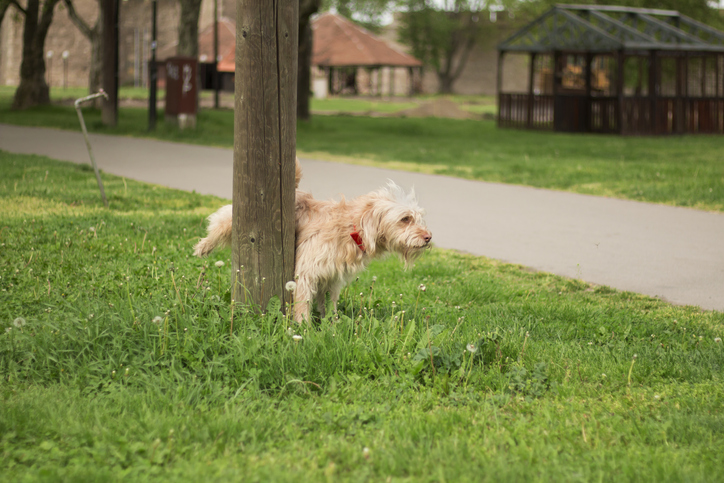
If mysterious brown patches have appeared in your lawn since getting a dog, the two things are almost certainly connected. Dog urine is high in nitrogen, and concentrated nitrogen scorches grass rather than fertilizing it.
Why Some Dogs Cause More Damage Than Others
- Female dogs are more likely to cause lawn burn. They squat and void their bladder in one concentrated spot, whereas males tend to mark in smaller amounts across multiple areas.
- Larger dogs produce more urine per visit, creating a bigger puddle and a wider burn zone.
- Dogs kept indoors for long periods hold their urine longer, making it more concentrated when they finally go.
Diet also plays a role. High-protein diets produce more nitrogen in the urine. Puppy food, which is higher in protein than adult food, tends to be a bigger contributor to lawn burn than adult formulas.
What You Can Do About Lawn Burn
Several practical options can reduce the damage:
- Increase water intake: More water means more dilute urine. A pet fountain encourages dogs to drink more throughout the day.
- Dilute the spot: Water the area immediately after your dog urinates to dilute the nitrogen before it scorches the roots.
- Adjust the diet: Look for a food that draws more calories from fat and carbohydrates rather than protein.
- Reseed with hardier grass: Fescue and rye grass varieties are more resistant to nitrogen damage than other species.
- Train a designated toilet spot: Teaching your dog to use one out-of-the-way area limits the damage to a patch you care less about.
One caution: be wary of commercial anti-scorch supplements that contain methionine. These work by acidifying the urine, which can increase the risk of bladder stone formation in some dogs.
Problem 2: Risks of Dogs Eating Grass Directly
Grass eating is usually harmless, but there are a few specific situations where it becomes a health concern.
Pesticides and Herbicides
Treated grass is the most immediate risk. Many lawn treatments, including weed killers, pesticides, and some fertilizers, are toxic to dogs. A dog that regularly grazes on treated grass can ingest a meaningful amount over time.
Always check whether a lawn has been recently treated before letting your dog graze. Public parks and sports fields are commonly treated, sometimes without clear signage.
Stomach Blockage From Long Grass
Swallowing long grass blades whole rather than chewing them can, in rare cases, cause a blockage or become tangled in the stomach. This is more of a risk in dogs that eat large quantities quickly rather than occasional casual grazers.
If your dog is eating non-food items compulsively beyond just grass, this may indicate a condition called pica. Dogs with pica eat rocks, soil, fabric, and other non-food objects in addition to plant material. Why is my dog eating poop covers a related compulsive
Problem 3: Grass Awns and Foreign Bodies
This is the most serious of the three grass-related problems veterinarians see. Grass awns are the seed heads of certain grasses, and they are shaped like tiny darts. When a dog runs through long grass, awns attach to the coat and can work their way into the skin, ears, or paws.
The sharp tip of the awn pierces the skin, and the seed then migrates inward. Unlike a splinter, it does not come back out on its own. It continues to travel deeper, causing infection, abscess, swelling, and significant discomfort.
Where Grass Awns Most Commonly Lodge
- Between the toes: This is the most common location. It often produces what looks like an interdigital cyst. You may notice your dog licking or chewing at one paw persistently. See our guide on itchy dog feet for more on paw irritation causes.
- In the ear canal: A grass awn in the ear causes intense discomfort, head shaking, and scratching at the ear. Because it migrates inward, it can be difficult to see and often requires veterinary removal under sedation.
- In the skin or coat: Awns can also penetrate the skin along the belly, armpit, or groin, causing swelling and abscesses in areas that can be hard to detect.
How to Prevent Grass Awn Injuries
- Check your dog’s paws, ears, and coat after every walk through long or wild grass, particularly during summer months.
- Spot awns while they are still on the surface and remove them before they penetrate the skin.
- For drop-eared breeds such as spaniels and basset hounds, consider clipping the fur on the earflaps short during summer to reduce the surface area where awns can catch.
- For longhaired breeds, keep the fur between the toes trimmed to reduce awn accumulation around the paws.
If you notice swelling, persistent licking, discharge, or a wound that will not heal after time outdoors in long grass, see your vet promptly. Grass awn injuries can look minor on the surface while causing significant damage underneath. See our full guide on foreign bodies in dogs for a broader overview of what to do when something gets lodged in or under your dog’s skin.
When Should You Be Concerned About Dogs Eating Grass?
Most grass eating requires no intervention. However, contact your vet if any of the following apply:
- Your dog is eating grass obsessively or in very large quantities.
- Grass eating is always followed by vomiting, particularly if it is happening daily.
- Your dog seems unwell before eating grass, such as showing signs of abdominal discomfort or bloating.
- You suspect the grass has been treated with pesticides or herbicides.
- You notice swelling, discharge, or persistent licking at a paw or ear after time in long grass.
Quick Summary: Dogs Eating Grass
- Usually normal: Grass eating is common, instinctual, and mostly harmless.
- Safe to allow as long as the grass is untreated and not being consumed in extreme quantities.
- Vomiting after grass is less common than widely believed and usually self-resolving.
- Lawn burn is caused by nitrogen in urine, not grass eating itself. Dilution and dietary changes help.
- Grass awns are the biggest risk. Check paws and ears after walks in long or wild grass.
- See a vet if the behavior is obsessive, always followed by vomiting, or if you suspect a grass awn injury.
It Is Gross. It Is Also Fixable.
Dogs eating grass is almost always a harmless quirk of canine behavior. Understanding why they do it makes it much less alarming, and knowing the three real risks, lawn burn, chemical exposure, and grass awns, helps you manage the parts that actually matter.
Keep an eye on how often it happens and whether anything changes. Most dogs that graze on grass are simply being dogs.
Frequently Asked Questions (FAQ)
Why are my dogs eating grass?
Dogs eat grass for several reasons. The most likely explanation is instinct: in the wild, dogs consumed plant material as part of their diet. In domestic dogs, this behavior persists as a way to take in extra roughage or simply because they enjoy it.
Some dogs eat grass when their stomach is unsettled because the irritation triggers vomiting and provides relief. Others do it out of boredom, habit, or mild anxiety.
How to stop dogs from eating grass?
If the grass eating is harmless and occasional, you may not need to stop it at all. If you want to reduce it, the most effective approaches are:
– Increase daily exercise and mental stimulation to address boredom.
– Supervise outdoor time and redirect with a command and reward.
– Ensure your dog has a nutritionally complete diet so they are not seeking supplements from the environment.
– If anxiety is driving the behavior, address the underlying cause rather than just the grass eating itself.
Is it normal for dogs to eat grass every day?
Some dogs do eat grass daily and remain completely healthy. If your dog eats grass regularly with no vomiting, no signs of distress, and no change in behavior or weight, daily grass eating is likely harmless.
If it is a new or sudden behavior, or if it is paired with other symptoms, a vet visit is a sensible step.
Can dogs eating grass make them sick?
Occasionally yes. Grass treated with pesticides or herbicides can cause poisoning. Long grass swallowed whole can rarely cause a blockage. And grass awns from certain species can lodge in paws, ears, or skin and cause infection.
Grass itself, when untreated, is not toxic to dogs. The risks come from what is on it or what accompanies it in the environment.
Why does my dog eat grass and then vomit?
This is a well-known pattern but less universal than most people think. Dogs that eat grass when they feel nauseous are using the tickle of grass blades to deliberately trigger vomiting for relief.
However, research shows that most dogs do not vomit after eating grass. If your dog consistently vomits after eating grass, it is worth discussing with your vet to rule out an underlying gastrointestinal issue.