
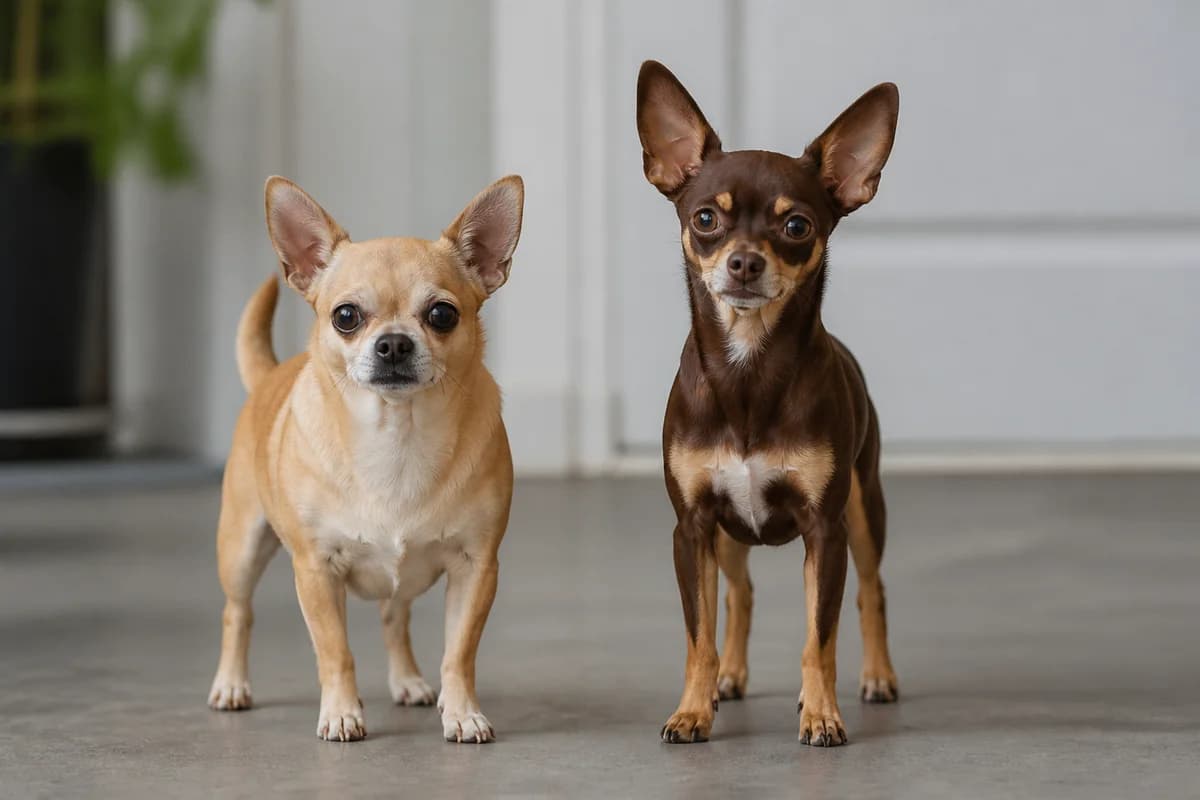
The apple head vs deer head Chihuahua comparison describes differences in skull, stop, muzzle and overall proportions. These labels do not represent two separate Chihuahua breeds, and they cannot establish ancestry, temperament, health or value.
Apple head reflects language in the official breed standard. Deer head is an informal appearance label people use for Chihuahuas with a longer muzzle and gentler forehead slope. Many dogs do not fit either internet example perfectly.
Apple Head vs. Deer Head Chihuahua at a glance
- 1Apple head refers to the rounded apple-dome skull described in the Chihuahua standard
- 2Deer head is an informal label, not a second recognized Chihuahua breed
- 3Individual dogs vary, so records and direct observation matter more than a head-shape label
- 4The most visible differences involve skull curve, stop, muzzle and sometimes body proportions
- 5Head shape does not reliably predict temperament, lifespan or health
Apple head vs. deer head at a glance
The Chihuahua Club of America breed standard describes a well-rounded apple-dome skull, with or without a molera, a well-defined stop and a moderately short, slightly pointed muzzle. The AKC Chihuahua profile provides the broader breed context.
An apple head vs deer head Chihuahua comparison describes visible tendencies, while an apple head Chihuahua and deer head Chihuahua remain members of the same breed rather than separate varieties.

Apple head vs. deer head comparison
| Feature | Practical comparison | Deer-head label | Evidence boundary for the individual dog |
|---|---|---|---|
| Skull | Rounded apple-dome aligns with standard wording | Often described as flatter or less domed | A photograph cannot prove ancestry |
| Stop | More clearly defined angle between forehead and muzzle | Often gentler or less abrupt | Angle varies among individuals and images |
| Muzzle | Moderately short in the standard | Often described as longer | Length does not diagnose airway or dental health |
| Body | Compact breed proportions remain relevant | Some examples appear longer-legged or leaner | No single body template defines every labeled dog |
| Recognition | Standard language supports apple-dome description | Informal appearance term | Neither label creates a separate breed |
Compare like with like
Use adult dogs standing naturally in the same orientation and neutral light. A close phone lens can exaggerate the nose, while a high camera angle can change the apparent forehead. Coat furnishings may also soften the outline.

Petful may earn a commission when you click through to Chewy, at no extra cost to you.
Look at a side profile and full body before choosing descriptive language. Keep the word appears in mind. Visual comparison is useful for terminology, not proof.
Breed tendencies describe populations, not every individual dog. Appearance, seller wording and documented records answer different questions. Compare the individual dog, available records and household routine before deciding whether the label has any practical relevance.
What to verify before you decide
Match evidence to the question
- Use the current standard for conformation terminology, documented evidence from a pedigree for lineage, health screening and veterinary records for medical context, and direct observation for behavior. Seek professional guidance for health or behavior interpretation. A head-shape label cannot replace any of those sources.
If a seller advertises an apple head or deer head Chihuahua, ask what is actually guaranteed in writing. A photograph may support a visual description, but a puppy’s proportions can develop and no head label proves a final size or health outcome.
The AKC parent-club health testing requirements give buyers a stronger starting point for screening questions than appearance marketing. Verify results under the correct parent identities.
What apple head means in the breed standard
Apple head Chihuahua is common shorthand for the skull and facial outline emphasized in the breed standard. The standard describes more than a round forehead, so avoid identifying a dog from one cropped image.

Rounded skull and defined stop
The apple-dome description refers to the overall rounded skull. The stop is the transition between forehead and muzzle. In a standard-like profile, that transition is well defined rather than a smooth continuous slope.
Hair, head position and camera angle can make the skull look more or less round. Compare multiple views and avoid measuring from an image whose lens or distance is unknown.
Moderately short muzzle
The standard calls for a muzzle that is moderately short and slightly pointed. Moderately is important. Extreme shortening is not required to use the apple-head description, and more extreme appearance should not be marketed as automatically better.
Do not use muzzle appearance to diagnose breathing, dental or neurologic conditions. Coughing, noisy or difficult breathing, exercise intolerance, pain, eating difficulty, seizures or other symptoms need veterinary assessment.
Ears and expression
Large erect ears and a balanced expression are part of the Chihuahua outline. Ear position changes with attention and emotion, so one moment may create a misleading comparison. Puppies also develop physically, and temporary ear carriage does not establish a separate type.
What people mean by deer head Chihuahua
Deer head Chihuahua is an informal term. It commonly describes a dog with a longer muzzle, less abrupt stop and a forehead that slopes more gently. Some dogs described this way also look longer-legged or less compact, but those traits do not arrive as a fixed package.

An airline-approved soft-sided carrier with mesh ventilation windows, a top-rated travel pick for cats and small dogs.
Petful may earn a commission when you click through to Chewy, at no extra cost to you.

Informal does not mean non-Chihuahua
A dog can be a documented Chihuahua and not match every ideal in a conformation standard. Standards define how dogs are evaluated in that setting. They do not erase pets, and they do not turn an informal appearance label into another breed.
Conversely, looking deer-headed does not prove a dog is purebred. Other small dogs and mixes can share a longer muzzle, erect ears or similar body outline. Use records for ancestry questions.
Rarity cannot be read from listings
There is no reliable universal population rate for deer-head Chihuahuas based on advertisements. Sellers may use the term broadly, and repeated listings are not a registry census. Do not pay a premium based on an unsupported rarity claim.
If a carrier is needed for meeting or transporting an individual dog, the Sherpa Original Deluxe Airline-Approved Dog and Cat Carrier is one tracked option to compare by measured body length, standing height, ventilation and escape risk. Head type does not determine carrier size.
When comparing the Sherpa Original Deluxe Carrier, verify current dimensions and provider rules. The phrase airline-approved is not acceptance by every carrier, fare or aircraft.
Muzzle, stop, ears and body proportions
Apple head vs deer head differences are easiest to evaluate as a set of proportions. Do not classify from eye size, color, coat length or one facial feature alone.
A repeatable visual method
Use these steps:
- View the adult dog from the side with the head held naturally.
- Trace the forehead curve and note the transition into the muzzle.
- Compare muzzle length with the rest of the head without assigning a medical meaning.
- Observe ear size and position across several relaxed moments.
- Step back to compare neck, back, leg and body proportions.
- Record the description as informal unless it comes directly from standard language.
This method improves consistency but still does not prove parentage. A skilled observer can disagree about a dog that sits between popular examples.
Avoid common photograph errors
Comparison images can create stronger differences than the dogs actually have. A wide-angle phone lens held close enlarges the muzzle or forehead nearest the camera. Turning one head slightly changes the apparent stop and skull curve. Different floor heights can make one dog appear longer-legged.
For a fair record:
- Use the same camera, distance and approximate focal length.
- Position both dogs on the same level surface.
- Photograph the head in a natural side profile without pulling the lead upward.
- Include a full-body side view as well as a close view.
- Use neutral daylight and avoid portrait-mode edge blur.
- Keep the original files and date them.
Do not draw lines over a distorted image and present them as veterinary or conformation measurements. A photograph is best used to explain a visible tendency and document change.
Consider age and expression
Puppy heads and bodies develop. A young Chihuahua may have proportions that look different after growth, muscle development and adult coat. Ear position also changes with attention, while panting or tension changes the mouth and facial outline.
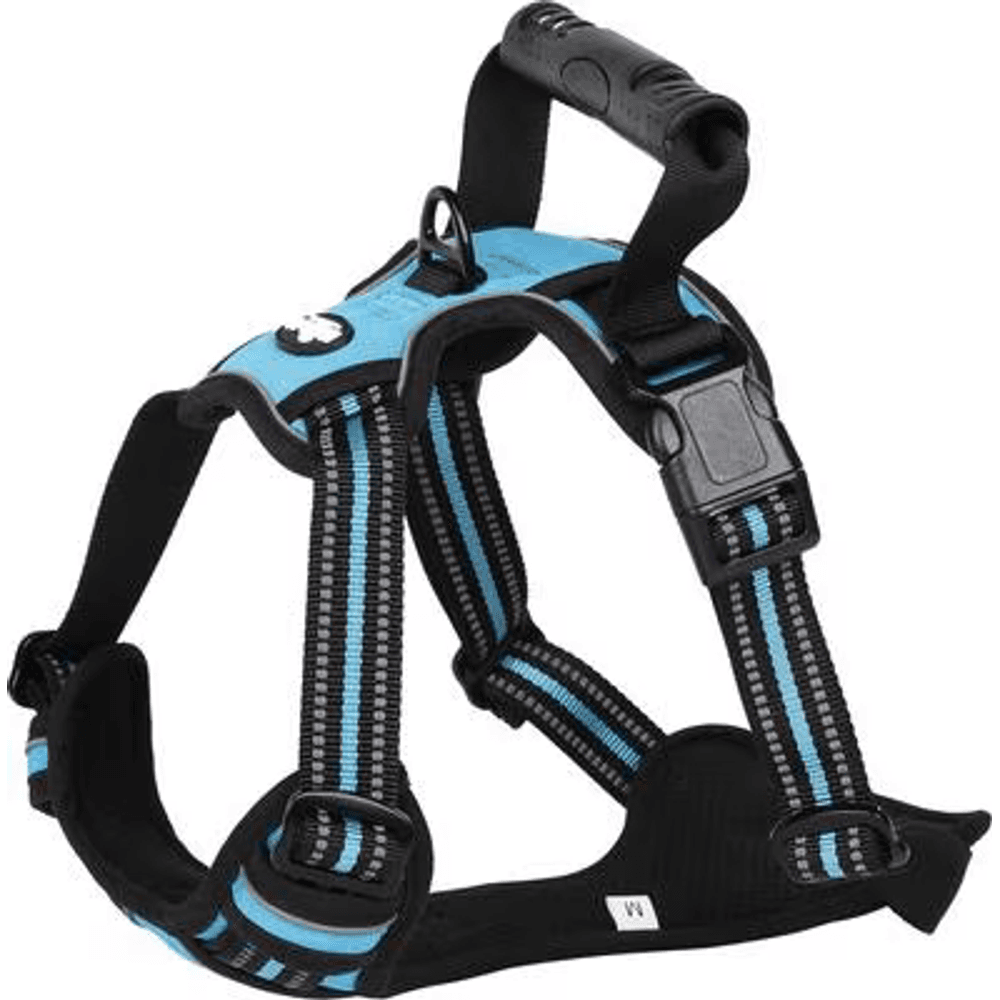
A padded, reflective no-pull harness that spreads leash pressure across the chest instead of the throat, the switch most vets recommend for a dog with a cough, a collapsing trachea, or any airway irritation so the leash never presses on
Petful may earn a commission when you click through to Chewy, at no extra cost to you.
Ask for dated images rather than a single ideal pose. A breeder can describe expected development but cannot guarantee that a puppy will reproduce one adult photograph exactly.
Equipment follows measurement
The EliteField Padded Reflective No Pull Dog Harness in Small is one tracked option to compare by neck, chest and movement. Do not select a harness from apple or deer head labeling.
For small-dog neck and body fit, WebVet compares harnesses and collars and explains when each may be appropriate.
Before using the EliteField Small Padded Reflective Harness, follow the current measurement diagram, check for rubbing and test whether the dog can back out. A harness does not diagnose or prevent an airway condition.
Are these separate Chihuahua types?
Apple head and deer head are not two official Chihuahua breeds. The recognized coat varieties are smooth coat and long coat. Petful’s Chihuahua colors, patterns and coat types guide owns that separate distinction.
Lists of types of Chihuahua often mix breed, coat variety, head label, size marketing and color, which creates categories that are not equivalent.
Breed, variety and label are different
- Breed: Chihuahua is the breed.
- Recognized coat variety: smooth or long coat.
- Standard description: apple-dome is part of the ideal head language.
- Informal label: deer head describes an appearance outside that exact shorthand.
- Marketing term: teacup, micro or rare may be used without a consistent official definition.
Keeping these categories separate prevents a seller from turning one visible trait into claims about ancestry, temperament, health or price.
Use records without overreading them
A pedigree documents recorded lineage when it is authentic and linked to the specific dog. Registration documents the dog within a registry’s process. Neither document guarantees health, temperament or quality, and neither should be inferred from appearance.
A DNA ancestry report can provide another kind of evidence within the test’s reference database and confidence limits. It does not transform deer head into an official variety or certify conformation. Likewise, a color or trait result is not a complete health screen.
Resolve record conflicts before proceeding
When records conflict with seller statements, pause and verify with the issuing organization. Preserve the listing, contract and communication. A source who will not explain a discrepancy should not receive a deposit based on urgency.
Petful’s main Chihuahua breed guide explains the broader breed. Individual dogs vary regardless of head label.
Head shape and health claims
Neither apple head nor deer head provides a reliable personal health forecast. An apple head Chihuahua health discussion must begin with screening, records and veterinary findings, not a skull photograph. Are deer head Chihuahuas healthier? There is not enough evidence in a visual label to answer yes for an individual dog.
Do not convert correlation into diagnosis
Skull and muzzle shape can be medically relevant in a clinical assessment, but an owner cannot diagnose hydrocephalus, airway disease, dental disease or another condition from a head photograph. The presence or absence of a molera also needs appropriate veterinary context.
Seek veterinary guidance for:
- Difficult or noisy breathing, collapse or exercise intolerance.
- Seizures, severe imbalance or altered awareness.
- Pain, head sensitivity or sudden behavior change.
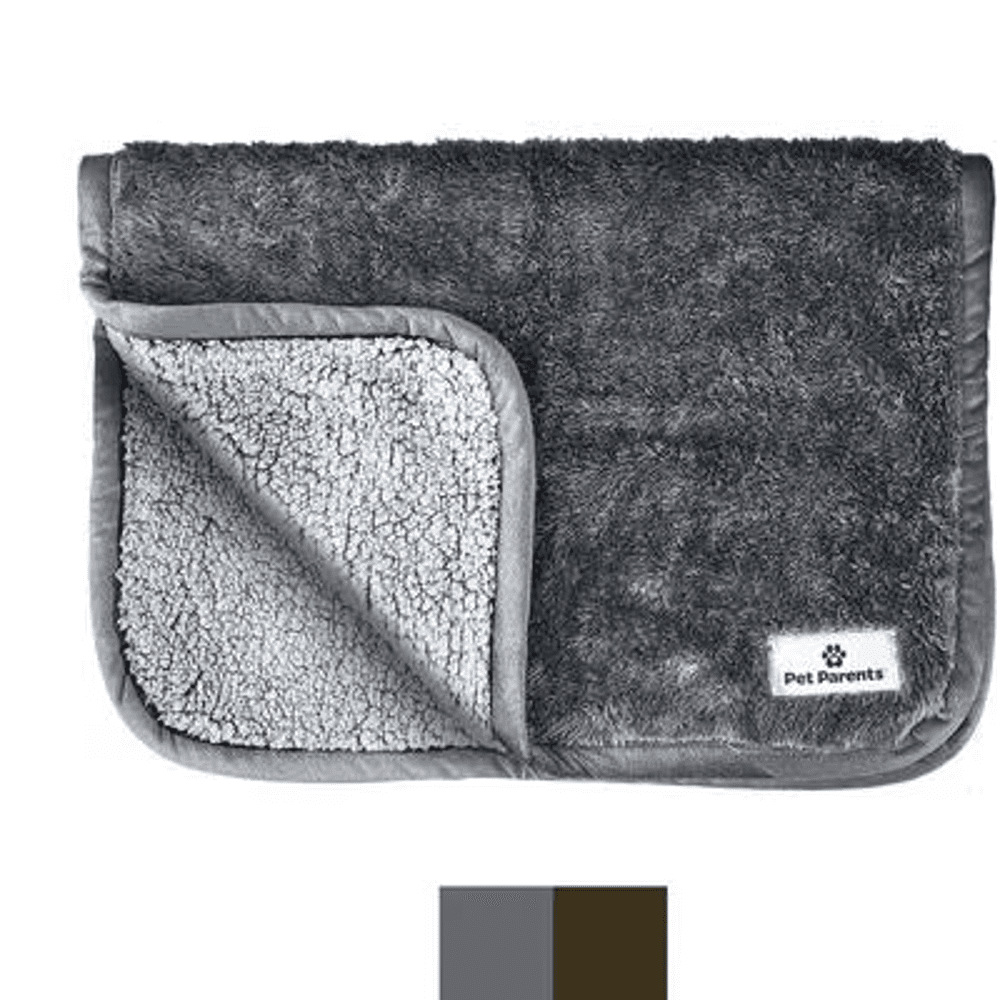
A plush, waterproof sherpa blanket that gives a cold or shivering dog a warm, cozy layer to curl into. The hidden waterproof lining protects the bed, couch, or car seat, and the whole thing is machine washable.
Petful may earn a commission when you click through to Chewy, at no extra cost to you.
- Trouble eating, dropping food or facial swelling.
- Eye injury, squinting, cloudiness or marked redness.
- Rapid decline or any severe symptom.
Petful’s DVM-authored Chihuahua health issues and lifespan guide covers screening and warning signs without assigning outcomes by head shape.
Daily care follows the dog
If timed feeding supports an established routine, the Petlibro Granary WIFI Automatic Cat and Dog Feeder with Camera is one tracked option to compare for portion accuracy, cleaning, kibble compatibility and power backup. Head shape does not determine calories.
Test several portions from the Petlibro Granary WIFI Automatic Feeder and observe the dog eating. Difficulty picking up food, chewing or swallowing needs veterinary assessment rather than an equipment assumption.
How to evaluate seller claims
A deer head Chihuahua for sale query belongs to a buying-safety decision, not just an appearance comparison. Petful’s records-first Chihuahua puppies, breeders, adoption and buying safely guide covers the complete verification process.
How to evaluate seller claims begins with separating what can be observed, what is predicted and what must be proved by records. Apply that same standard even when the photograph or pickup date feels ideal.
Ask for evidence in layers
Before paying, request:
- Legal source identity and a live view of the specific dog.
- Registered identities and pedigree when ancestry is claimed.
- Parent screening tied to those identities for a breeder litter.
- The individual dog’s veterinary record and microchip.
- The written meaning of any apple, deer, teacup or rarity claim.
- Contract, deposit, refund, pickup and return terms.
Do not treat a higher price, dramatic profile or rare label as quality evidence. Walk away from pressure, identity changes, untraceable payment demands or refusal to provide records.
Compare the complete dog
Ask how the Chihuahua responds to handling, unfamiliar people, other animals, confinement and ordinary household sounds. Observe movement, recovery and comfort. A head label should never distract from limping, breathing difficulty, fear or poor living conditions.
Write a decision using three columns:
- Documented: identity, pedigree, screening and veterinary records.
- Observed: body proportions, movement, behavior and environment.
- Required at home: training, supervision, veterinary care, transport and budget.
Proceed only when all three columns support the placement. One attractive visual trait cannot compensate for missing evidence or a household mismatch.
Decode a head-shape listing line by line
Separate each seller statement into observation, prediction and proof. “Rounded forehead in current photographs” is an observation. “Will remain extreme apple head” is a prediction. “Registered Chihuahua from these named parents” is a documentary claim that should be verified.
Rewrite marketing language into questions:
- “Extreme apple head” becomes, “Which current standard feature are you describing?”
- “Rare deer head” becomes, “What population evidence supports rare?”
- “Healthier muzzle” becomes, “Which veterinary finding supports this individual claim?”
- “Guaranteed tiny adult” becomes, “What dated growth and parent records exist, and what does the contract guarantee?”
- “Purebred look” becomes, “Which pedigree or registration document is linked to this dog?”
If the answer returns to appearance, the documentary or health question remains unanswered. Do not let repeated wording create the impression of evidence.
Compare the contract with the advertisement. Note any promise about identity, registration, size, health, return terms or deposit. If a meaningful claim disappears from the written agreement, ask for clarification before paying. Preserve copies of the original listing and messages.
Puppy development also limits appearance promises. Request dated images from consistent angles and understand that skull, muzzle, body and coat proportions change. Parent photographs provide context but do not guarantee an identical adult.
Check whether the label changes care
Finally, assess whether the label changes the care plan. Food portions come from condition and veterinary guidance. Harness and carrier size comes from measurements. Temperament comes from observed behavior and history. Health comes from screening, records and examination. If the head label changes none of those decisions, it should not control the purchase.
Ask an independent veterinarian to review the individual dog within the written examination window. The visit is not a conformation judging session. Its purpose is to establish current findings, reconcile the record and identify follow-up. A normal first examination cannot guarantee future health, but it creates a documented baseline.
Keep appearance photographs with the file only as identification and development records. Do not relabel a veterinary finding as proof that all apple-head or deer-head dogs share the same outcome.
Choose comfort items by need
The Pet Parents Pawtect Waterproof Small Blanket is one tracked washable layer to compare by resting-space measurements, laundering and chewing behavior. It has no relationship to head type.
Use the Pet Parents Pawtect Small Blanket where it cannot block water, airflow or an exit. New cold-seeking, stiffness or house-soiling should prompt medical consideration rather than only different bedding.
Is this the right dog for your household?
- The visual labels can help explain skull and muzzle differences for household fit discussions
- Standard language gives apple head a clear context
- Side-by-side profiles make proportions easier to compare
- Records can answer questions appearance cannot
- Neither label predicts temperament or health
- Deer head is used inconsistently
- Puppy proportions can change
- Marketing cannot predict individual behavior and can turn appearance into unsupported rarity claims
Choose the individual Chihuahua based on health evidence, behavior and household fit. A calm meeting, complete records and a sustainable care plan matter more than whether a profile fits a popular category.