
This article is sponsored by The Honest Kitchen. Petful maintains editorial control and uses current product information plus independent pet-nutrition guidance.
Cat food toppers can add a new texture, aroma, flavor, or measured amount of moisture to a familiar meal. The safest approach is to decide whether you are using a complete cat food in a smaller portion or a supplemental extra such as a treat, broth, or milk product. That label distinction determines how much nutritional room the topper has and whether the cat’s complete-and-balanced base diet remains intact.
- 1Complete cat food can be used in a measured smaller amount while supplemental extras should remain limited
- 2Choose a topper for a specific goal such as texture, aroma, or moisture
- 3Introduce tiny tastes gradually so the cat keeps eating its balanced base food
- 4Count every extra within the daily calorie plan
- 5Use cat-specific broth or milk directions and avoid unsafe human ingredients
What Cat Food Toppers Can Add
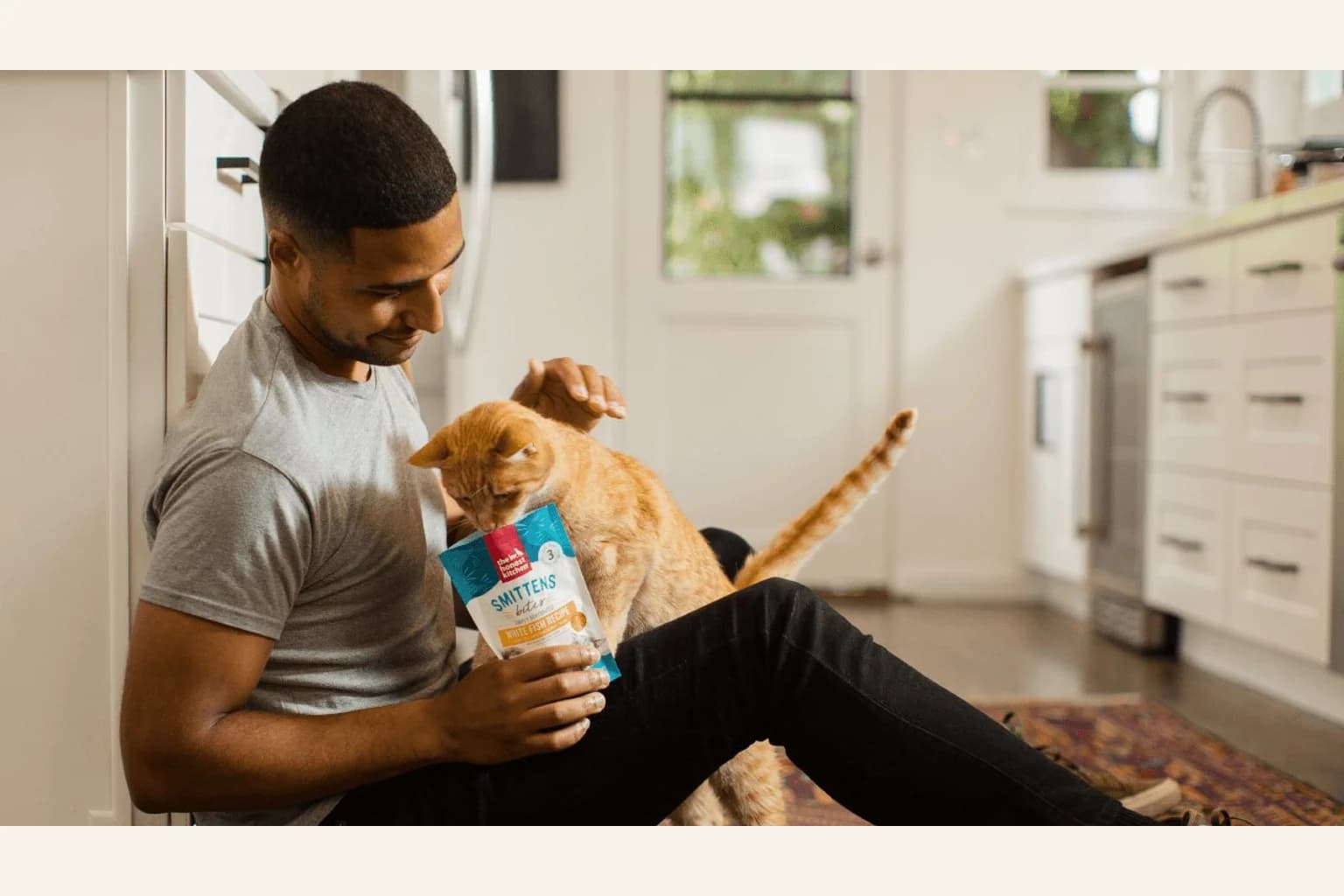
A topper is a small amount of food added to a cat’s regular meal. It may make the bowl smell more interesting, change the mouthfeel, add water, or create variety. Those are practical uses. A topper is not automatically a vitamin supplement, appetite treatment, hydration therapy, or solution for a medical problem.
Start by naming the goal. If the cat likes gravy, a spoonful of a compatible wet food may be more useful than crunchy pieces. If the cat prefers crunch, a measured portion of complete dry food can create contrast. If the owner wants to add water, a hydrated complete food or cat-appropriate broth may fit. If the goal is simply a high-value flavor, a few crumbs of a supplemental fish treat may be enough.
The smaller and more precise the goal, the easier it is to judge whether the topper works. “My cat ate the familiar meal with a teaspoon of compatible minced food” is observable. “This topper improved urinary health” is a medical conclusion that the bowl alone cannot establish. The best cat food topper is the one that meets a specific goal without displacing complete nutrition. A compatible wet food can add gravy, hydrated food can soften a meal, and a label-directed broth can add aroma. Healthy cat food toppers still need measured portions, suitable ingredients, and a label that makes their complete or supplemental role clear.
Petful may earn a commission when you click through to The Honest Kitchen, at no extra cost to you.
Some products marketed or used as toppers are complete cat foods. Others are labeled for intermittent or supplemental feeding. The first can contribute balanced nutrition when fed according to its label. The second should occupy only a small part of the overall diet unless a veterinary nutrition plan says otherwise.
The nutritional adequacy statement is the decisive label. The FDA guide to complete-and-balanced pet food explains that the statement identifies whether a food meets a recognized nutrient profile and for which life stage. Product format does not answer that question. Wet food, dry pieces, hydrated food, treats, broth, and supplements can each have different label status.
This is especially important with a selective cat. Owners sometimes keep adding more extras until the cat eats only the topper. If the extras are supplemental, the complete diet can be displaced. Instead, use the smallest amount that achieves the texture or aroma goal and keep the balanced base meal recognizable.
Complete Food or Supplemental Topper
| Topper format | Possible label role | How to use it | Main check |
|---|---|---|---|
| Hydrated cat food | May be complete and balanced on the exact recipe | Add a measured smaller portion to the base meal | Confirm adequacy, life stage, calories, and water directions |
| Whole Food Clusters | May be complete and balanced on the exact recipe | Sprinkle a measured amount for crunch | Confirm adequacy, calories, and portion |
| Wet cat food | May be complete and balanced on the exact recipe | Add a spoonful for gravy or soft texture | Confirm adequacy and storage after opening |
| Fish treat crumbs | Intermittent or supplemental | Use a very small flavor accent | Count treat calories and verify ingredients |
| Broth or milk product | Often supplemental | Use only according to cat-specific directions | Check species directions, calories, sodium, ingredients, and storage |
Choose a Goal: Texture, Flavor, Moisture, or Variety
Texture
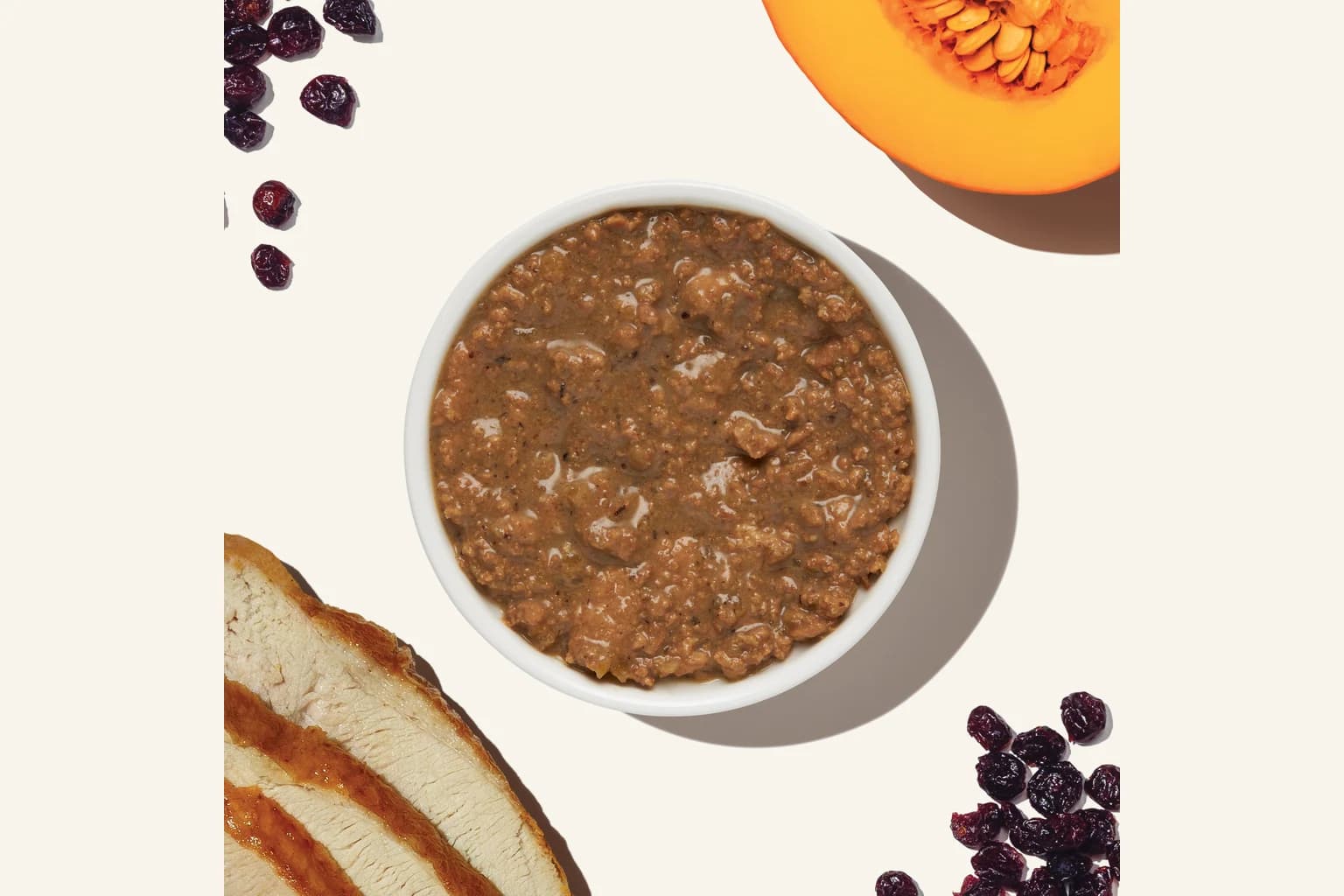
Texture can be the most important variable for a cat. Crunchy pieces, hydrated mash, minced food, gravy, pâté, flakes, and liquid are not equivalent. A cat may reject a protein it normally likes when the texture changes. Use a tiny amount at the edge of the familiar food so the cat can investigate without losing access to its normal meal.
Flavor and aroma
Fish treats, meat-rich wet food, and warm hydrated food can create a strong aroma. A small amount may be enough. More is not necessarily better. An overwhelming smell can repel a cautious cat, and repeated escalation can teach the cat to wait for a richer extra.
Moisture
Wet food, hydrated food, or added water can increase the amount of water consumed with a meal. The Cornell Feline Health Center identifies wet food and water added to food as useful ways to increase feline water intake. That is not the same as treating dehydration or urinary disease.
Variety
Measured variety can keep meals interesting, but too many simultaneous changes make reactions hard to interpret. Introduce one topper at a time. Keep the base diet, portion, and schedule stable while you observe appetite, stool, vomiting, and behavior.
Petful may earn a commission when you click through to The Honest Kitchen, at no extra cost to you.
The Honest Kitchen Complete Foods That Can Double as Toppers
The Honest Kitchen’s feline range includes foods that may be served as complete meals when the exact label confirms adequacy. A measured smaller amount can also provide topper texture or flavor without introducing a wholly different product category. Always verify the current recipe because formulation, availability, and adequacy language can change.
Dehydrated Grain Free Chicken and Fish
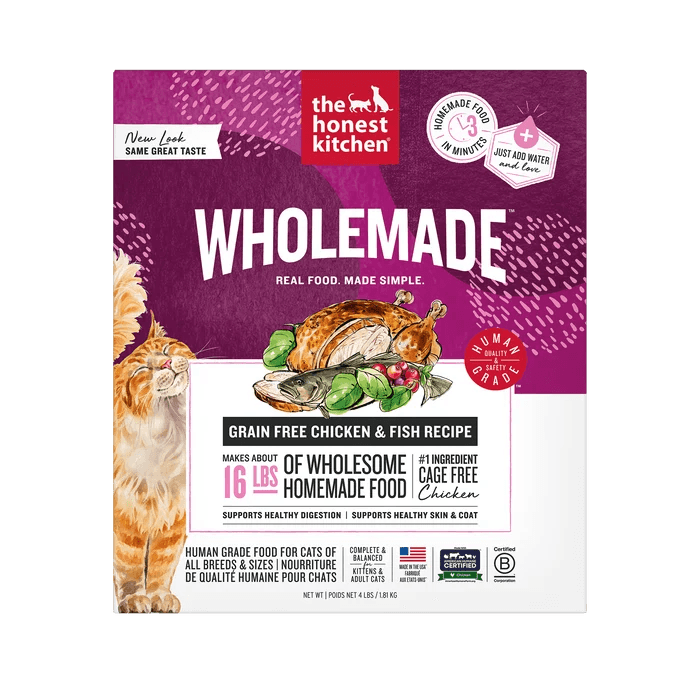
Dehydrated Grain Free Chicken and Fish is mixed with warm water and allowed to hydrate before serving. In a smaller measured amount, it can create a soft, aromatic layer. Its water is part of the preparation, which can support a moisture goal.
Use the cat recipe’s own dry-to-water instructions. Do not transfer a dog formula’s ratios. If the cat is new to hydrated food, begin with a pea-size taste and increase gradually. The goal is acceptance without displacing the familiar meal.
Grain Free Turkey and Chicken Whole Food Clusters
Grain Free Turkey and Chicken Whole Food Clusters can supply crunchy contrast. Count the pieces or weigh the portion so crunch does not become an untracked second meal. Because a complete food has its own calorie density, the amount still belongs in the cat’s total daily intake.
Clusters may be especially useful for a cat that rejects wet additions but enjoys a novel crunch. They can also be crushed lightly when the cat prefers smaller pieces, provided the package and feeding plan support that use.
Wet cat food toppers are useful when a cat prefers soft pieces or gravy. Check the exact recipe’s nutritional adequacy statement and count its calories even when serving only a spoonful. A grain-free cat food topper is not automatically better for a cat without a specific dietary need; choose the ingredients, texture, and portion that fit the individual feeding plan.
Minced Turkey in Bone Broth Gravy
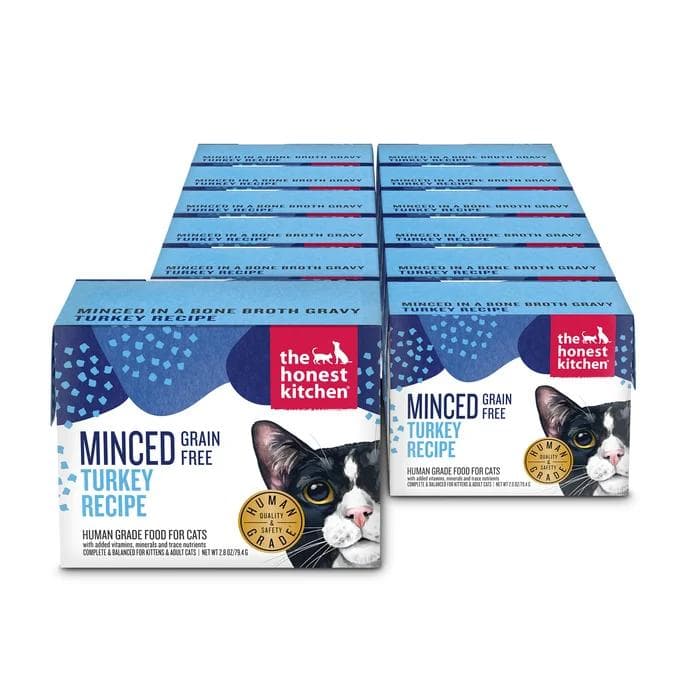
Minced Turkey in Bone Broth Gravy offers a minced texture plus gravy. A spoonful can change both moisture and mouthfeel. Confirm the current adequacy statement and refrigerate the opened product according to the package.
This is a food made for cats, which matters. It is not the same as pouring a dog-oriented broth or human stock over the bowl. Species directions and the complete finished recipe provide the relevant context.
For a broader view of the complete feline range, see Petful’s guide to The Honest Kitchen cat food.
The Honest Kitchen Treat, Broth, and Hydration Options
Supplemental products can be useful in tiny, intentional amounts. Their role must stay clear so they do not replace the balanced base diet.
Dry cat food toppers and powders require different preparation. A small amount of complete dry cat food can add crunch, while a broth or milk powder should be mixed according to its cat-specific directions before serving. A powdered format is not automatically a vitamin supplement or a complete meal. Include the portion in the calorie plan and check tolerance.
Smittens White Fish Cat Treats
Smittens White Fish Cat Treats list dehydrated white fish and sea salt and are labeled for intermittent or supplemental feeding. They are not a single-ingredient product and not a complete meal. A small crumble may add fish aroma, but the calories and sodium-containing ingredient statement should be considered in the total plan.
Cats with fish restrictions, kidney or heart concerns, prescription diets, or another medical nutrition plan need veterinary approval before this or any treat is added.
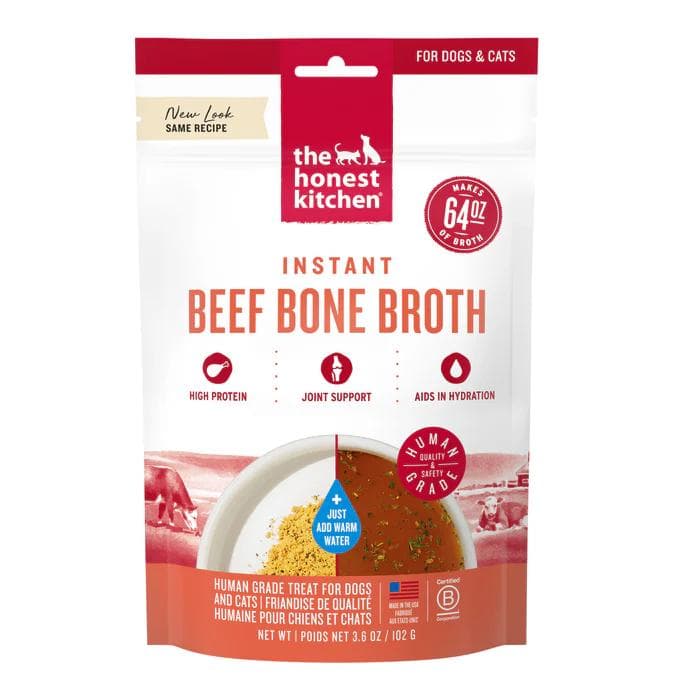
Instant Beef Bone Broth
Instant Beef Bone Broth appears in THK’s current cat-oriented collection, but the product page is dog oriented. That is a meaningful boundary. Do not apply dog weight-based directions to cats. Use only cat-specific package instructions or feline serving guidance confirmed by the manufacturer.
Human broth is not a substitute. Many stocks contain too much sodium or cat-unsafe onion and garlic. A product should have a transparent ingredient list, suitable species directions, measured calories, and safe storage instructions.
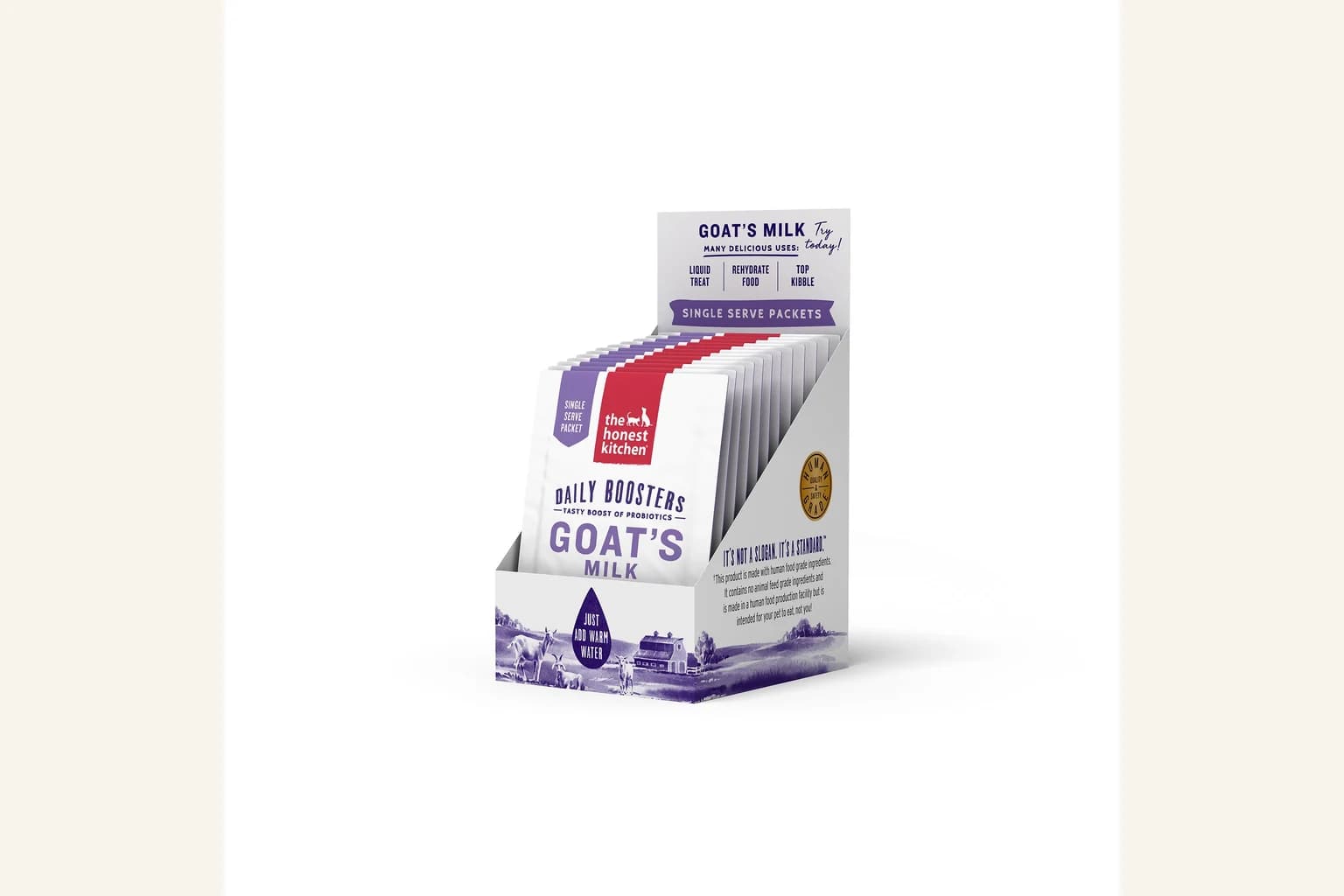
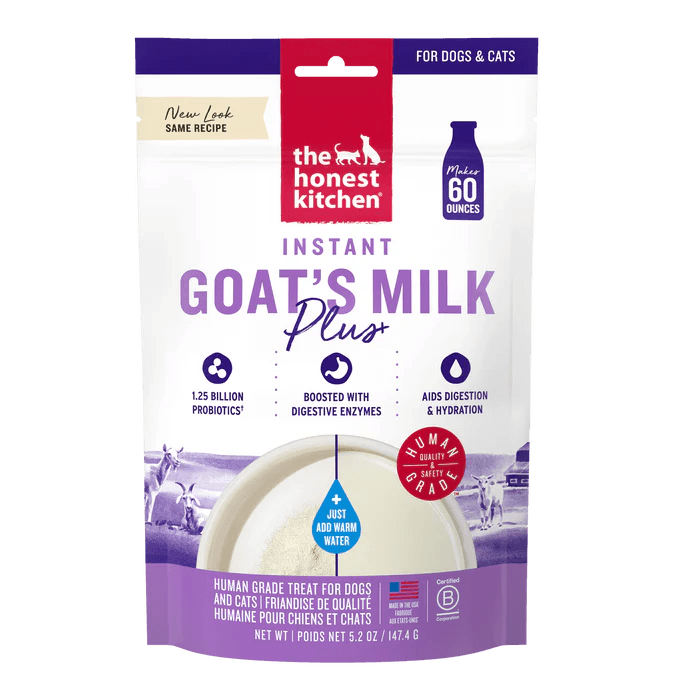
Instant Goat’s Milk Plus
Instant Goat’s Milk Plus also appears in a current cat treats and hydration collection while its product page is dog oriented. Do not generalize dog directions to cats or assume that ordinary dairy tolerance applies. Goat’s milk is supplemental, and probiotic language should not become a guaranteed digestive outcome.
Cat-specific directions are required
- Collection placement can signal feline relevance, but it does not justify applying dog weight-based instructions to a cat. Use current cat-specific package directions or feline guidance confirmed by the manufacturer.
Portions and the 10% Treat-Calorie Guardrail
The WSAVA cat treat guide recommends keeping treats below 10% of daily calories for most cats. The complete-and-balanced diet should supply at least the other 90%. That allowance includes every supplemental extra: treat crumbs, broth powders, milk products, table food, and calorie-containing rewards.
Petful may earn a commission when you click through to The Honest Kitchen, at no extra cost to you.
Complete food used as a topper also adds calories, even though it is nutritionally balanced. The portion should be included in the total daily food allocation. If you add 20 calories of a complete wet food to a measured dry-food plan, the base portion generally needs adjustment so the total does not rise unintentionally.
Use this method:
- Confirm the cat’s daily calorie target with the feeding plan or veterinarian.
- Decide whether the topper is complete food or supplemental.
- Read the current calories per can, cup, packet, scoop, or treat.
- Measure the intended amount rather than estimating a spoonful.
- Reduce the base food if needed to keep total calories on plan.
- Keep supplemental extras within the discretionary allowance.
Cat Topper Portion Method
| Step | Complete-food topper | Supplemental topper |
|---|---|---|
| Identify label role | Confirm complete-and-balanced statement and life stage | Confirm intermittent or supplemental statement |
| Measure calories | Count within total daily food calories | Count within the treat and extras allowance |
| Adjust base meal | Reduce as needed so total daily calories stay stable | Keep base diet central and limit the extra |
| Watch response | Appetite, body condition, stool, vomiting | The same, plus refusal of the balanced base food |
How to Introduce a Topper to a Selective Cat
The fastest way to fail is to cover the entire familiar meal with a new smell. Cats may treat a changed bowl as unsafe. Begin with a dusting, crumb, or pea-size taste placed beside the usual food. Let the cat approach voluntarily.
A useful topper ladder is:
- Days 1 to 3: Present a tiny taste beside the familiar food.
- Next stage: If accepted, touch a small amount to one edge of the meal.
- Measured mix: Blend a modest portion into part of the meal while leaving familiar food visible.
- Intended use: Move to the smallest measured amount that reliably meets the texture, aroma, or moisture goal.
Do not advance by calendar alone. Repeat a stage until the cat accepts it comfortably. If the cat eats around the addition, reduce the amount. If the cat refuses the entire meal, remove the topper and offer the safe familiar food. Cats should not be starved into accepting a new texture.
Stop and contact a veterinarian for persistent appetite loss, repeated vomiting, significant diarrhea, lethargy, pain, or other illness. A cat that is not eating can become medically urgent.
Use the smallest successful amount
- A topper is working when a measured amount achieves the intended texture, aroma, or moisture goal while the cat keeps eating the balanced base meal. More topper is not automatically more effective.
Hydration Benefits Without Medical Promises
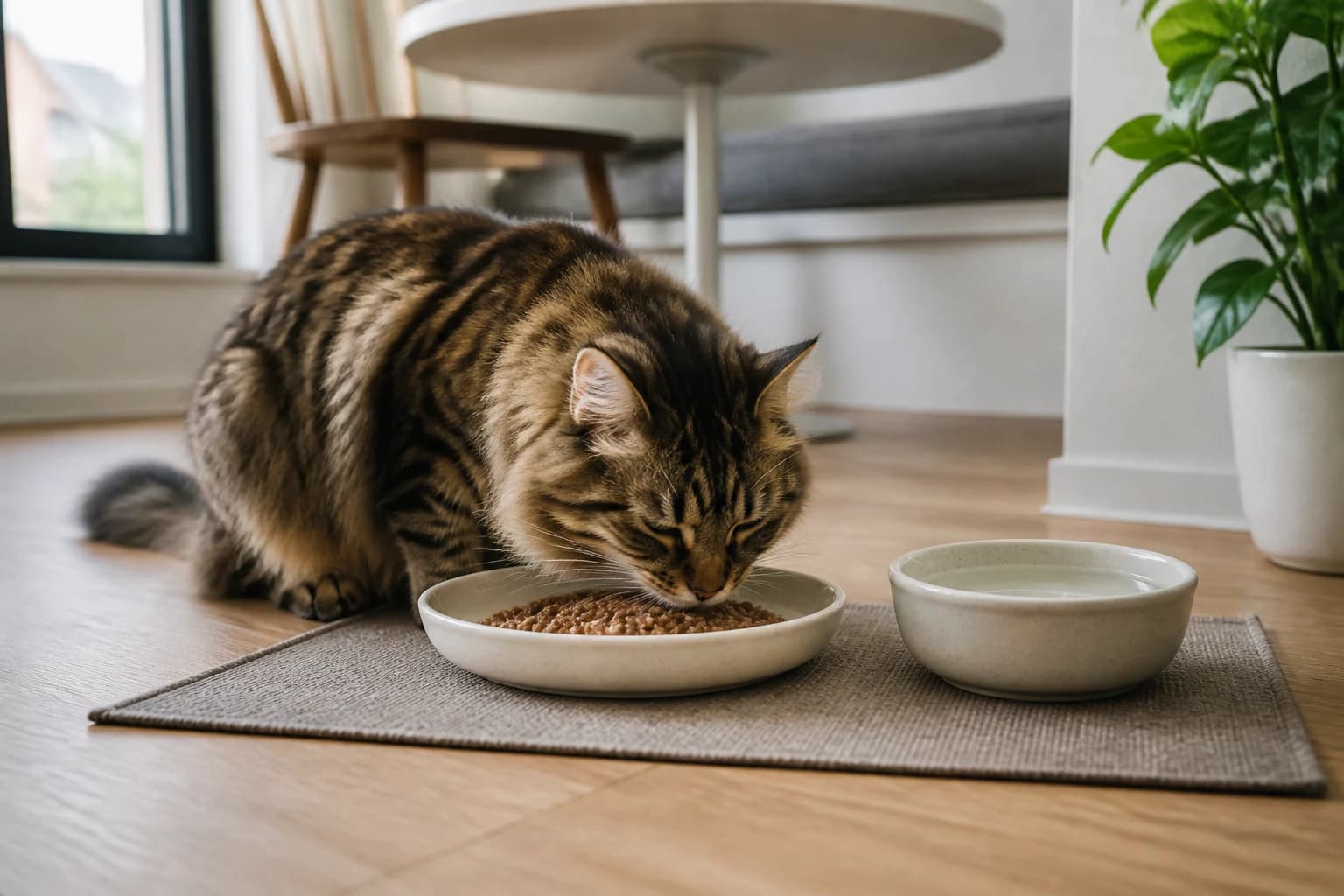
Water added to food can increase water intake. Wet cat food and properly prepared dehydrated food can do the same by carrying moisture in the meal. This can be useful in an ordinary hydration routine alongside fresh water bowls or fountains.
It is not treatment for a dehydrated cat. Signs such as marked lethargy, dry or tacky gums, weakness, repeated vomiting, diarrhea, or reduced urination require veterinary attention. Likewise, urinary obstruction is an emergency, and kidney or urinary disease needs a nutrient plan beyond simply adding broth.
When using a liquid topper, verify that the ingredients are cat safe. Avoid onion, garlic, chives, high-sodium human stock, alcohol, and unapproved seasonings. Count calories, follow storage instructions, and discard leftovers that have remained out too long.
Petful may earn a commission when you click through to The Honest Kitchen, at no extra cost to you.
Ingredients and Diet Situations That Need Extra Care
Ask before adding toppers when a cat has:
- A prescription kidney, urinary, diabetes, gastrointestinal, or weight-management diet.
- A diagnosed or suspected food allergy.
- Pancreatitis or another condition affected by fat intake.
- Heart disease or another plan that may restrict sodium.
- A history of food refusal or digestive upset with changes.
- Medication whose administration depends on a consistent diet.
Toppers can be positive and practical within those households, but the exact product and amount may need to be incorporated into the veterinary plan. An ingredient that is ordinary for a healthy cat can be inappropriate for a specific therapeutic goal.
Dog owners use similar principles, but products and portions are species specific. Petful’s dog food topper guide is a related concept, not a source of cat feeding amounts.
A topper decision tree for real households
Start with the problem the owner is trying to solve. If the cat eats an adequate complete diet and the owner simply wants variety, use a very small measured amount and keep the base food central. If the cat prefers softer textures, a spoonful of an appropriate wet complete food may be more useful than a dry treat. If the owner wants aroma, a small amount of prepared dehydrated food or a crumbled fish treat can provide it without covering the whole bowl.
If moisture is the goal, first see whether the cat will accept additional water mixed into an already familiar wet food. This is simple, easy to measure, and does not add calories. A broth or goat’s milk product can be considered only after its cat labeling, ingredients, directions, calories, and nutritional role are clear. Do not use a flavored product to make a medical hydration claim.
If the cat is refusing food suddenly, losing weight, vomiting, or acting unwell, stop the topper experiment and contact a veterinarian. The decision tree has left the preference lane and entered the medical lane.
How to compare two toppers fairly
Set the packages side by side and compare the same fields. Is each item a complete food or a supplemental product? What is the calorie content in the amount you will actually use? Does the ingredient list contain anything the cat should avoid? How long is it safe after opening or preparation? Can the household measure and store it correctly?
Then compare format. A Pour Over-style liquid, prepared dehydrated food, minced wet food, crumbled fish treat, broth, and goat’s milk product do not do the same job. The best fit is the one that addresses the identified texture, flavor, or routine goal while preserving the complete diet.
Do not rank by ingredient-list length alone. A short list is easier to audit, but complete nutrition often requires vitamins, minerals, and other essential nutrients. Conversely, a product with recognizable ingredients may still be supplemental. The adequacy statement and feeding directions settle the nutritional-role question.
Measuring tiny amounts without guesswork
Cat portions make small extras important. Determine the topper’s calories per teaspoon, tablespoon, piece, ounce, or other labeled unit. Convert that to the amount you plan to serve. If the package only lists calories per package or per kilogram, ask the manufacturer for a usable household measure rather than estimating repeatedly.
For a liquid topper, a teaspoon or marked syringe used only for food can improve consistency. For a crumbly treat, weigh the daily allotment before breaking it over meals. For complete wet or dehydrated food used as a topper, subtract the added calories from the base food according to the feeding plan.
The objective is not mathematical perfection at every bowl. It is preventing a casual drizzle or crumble from becoming a substantial untracked part of the diet. Review the cat’s weight and body condition over time and adjust with veterinary help when needed.
Food-safety routine for wet and hydrated toppers
Wash hands, use clean utensils, and avoid touching the package opening with a spoon that has been in the cat’s mouth or bowl. Serve a small amount. Refrigerate the remaining product promptly according to the current label, and mark the opening or preparation date if several people feed the cat.
Discard perishable food that has sat out too long. A cat that returns to the bowl repeatedly can make time tracking difficult, so offer smaller fresh portions rather than leaving a large serving available. Clean bowls between meals, especially when residue collects in corners or along silicone mats.
Dry treats also need protection from humidity and pests. Reseal the bag and retain the lot code and best-by date. A topper may be a small part of the meal, but it deserves the same handling discipline as the main food.
Preventing topper escalation
Owners sometimes begin with a light crumble, then add more each time the cat waits. Soon the cat is eating a large volume of extras and less complete food. Break that cycle by choosing a fixed measured amount, presenting the meal on a schedule, and avoiding an immediate sequence of alternatives after a refusal.
This does not mean withholding necessary food from a cat. The cat must continue consuming adequate calories, and a persistent appetite change deserves veterinary attention. It means separating a planned palatability tool from an open-ended negotiation at every meal.
Use the smallest effective amount and keep a short log. If the topper no longer works, ask whether the texture, temperature, freshness, bowl, environment, or underlying health has changed before simply adding more.
Using THK products with clear roles
The Honest Kitchen gives cat owners several ways to create a positive meal experience. A current complete dehydrated recipe can be prepared and served as the meal or used in a measured smaller amount over another complete food. A complete wet recipe can contribute a different texture. Smittens can supply a small fish-forward crumble. Cat-labeled hydration products can add another serving experience when their directions and role fit.
That breadth is useful because the owner can select a format instead of chasing an unsupported benefit claim. The brand’s value here is practical choice: soft, wet, dry, crumbled, or prepared. The nutritional discipline remains the same across all of them.
A simple meal note for caregivers
When more than one person feeds the cat, leave a short written instruction: exact base-food amount, exact topper amount, where each product is stored, when an opened item should be discarded, and what to do if the cat refuses the meal. This prevents a helpful caregiver from doubling the topper or opening several alternatives.
Include the veterinarian’s contact information for a cat with a medical condition. Ask caregivers to record appetite and any vomiting rather than quietly changing the plan. The note turns a small meal addition into a repeatable routine and preserves the information needed to judge whether it is helping with preference or simply adding calories.
If the cat eats from several locations, note which bowl received the topper. Otherwise a caregiver may count an untouched base-food bowl as a refusal even though the cat ate a full topped portion elsewhere. Clear records matter more than adding another flavor.
What to check
- Keep the note with the product rather than relying on memory. A measured cat-food topper is most useful when every caregiver repeats the same portion and storage routine.
Frequently Asked Questions
Frequently Asked Questions
Some complete cat foods can be used in smaller measured amounts as toppers, but treats, broths, and supplements are often labeled for intermittent or supplemental feeding. Check the exact nutritional adequacy statement.
Start with a dusting, crumb, or pea-size taste and move only to the smallest measured amount that achieves the goal. Count complete-food topper calories in the daily total and keep supplemental extras within the treat allowance.
A compatible texture or aroma may encourage interest, but toppers can also cause a cat to wait for richer extras. Introduce one small change at a time and make sure the cat keeps eating the complete base diet.
Yes, wet food and water added to food can increase intake. They do not treat dehydration, urinary obstruction, kidney disease, or another medical condition.
They may be suitable only when the product has transparent cat-safe ingredients and cat-specific directions. Do not apply dog weight-based instructions to cats, assume dairy tolerance, or use human broth containing excess sodium, onion, or garlic.


