
Petful is reader supported. As an affiliate of platforms like Amazon and Chewy, we may earn a commission when you buy through links on this page. There is no extra cost to you.
If you have ever wondered why do dogs like squeaky toys so much, the leading explanation is that the squeak likely sounds like prey. A high, sudden squeal resembles the distress cry of a small animal, and many behaviorists believe that sound switches on the part of a dog’s brain built for hunting.
That explanation is a well-supported hypothesis rather than a settled fact, because no one can ask a dog what it hears. Still, it fits what owners see every day: the stalk, the pounce, the frantic shaking, and the moment the dog finally rips the squeaker out and loses interest.

Don’t Guess When It Comes To Your Pet’s Care
Sign up for expert-backed reviews and safety alerts all in one place.
Quick answer: why dogs like squeaky toys
Why do dogs like squeaky toys? The most widely accepted explanation is prey drive. Dogs descend from predators, and even a lapdog keeps parts of the predatory sequence: orient, stalk, chase, grab-bite, kill bite, dissect, and consume. Breeding has exaggerated or muted different stages in different breeds, but the grab-and-bite stage is common to most dogs.
Why do dogs like the sound of squeaky toys in particular? A squeaker produces a short, high-pitched noise every time the dog bites down. To an animal shaped by thousands of years of hunting, that likely resembles the squeal of a rabbit or rodent in distress, and it arrives as instant feedback for the bite. That is also why dogs like chewing squeaky toys over silent ones: each chomp produces a result, so dogs like to chew on squeaky toys long after a quiet chew would have been dropped.
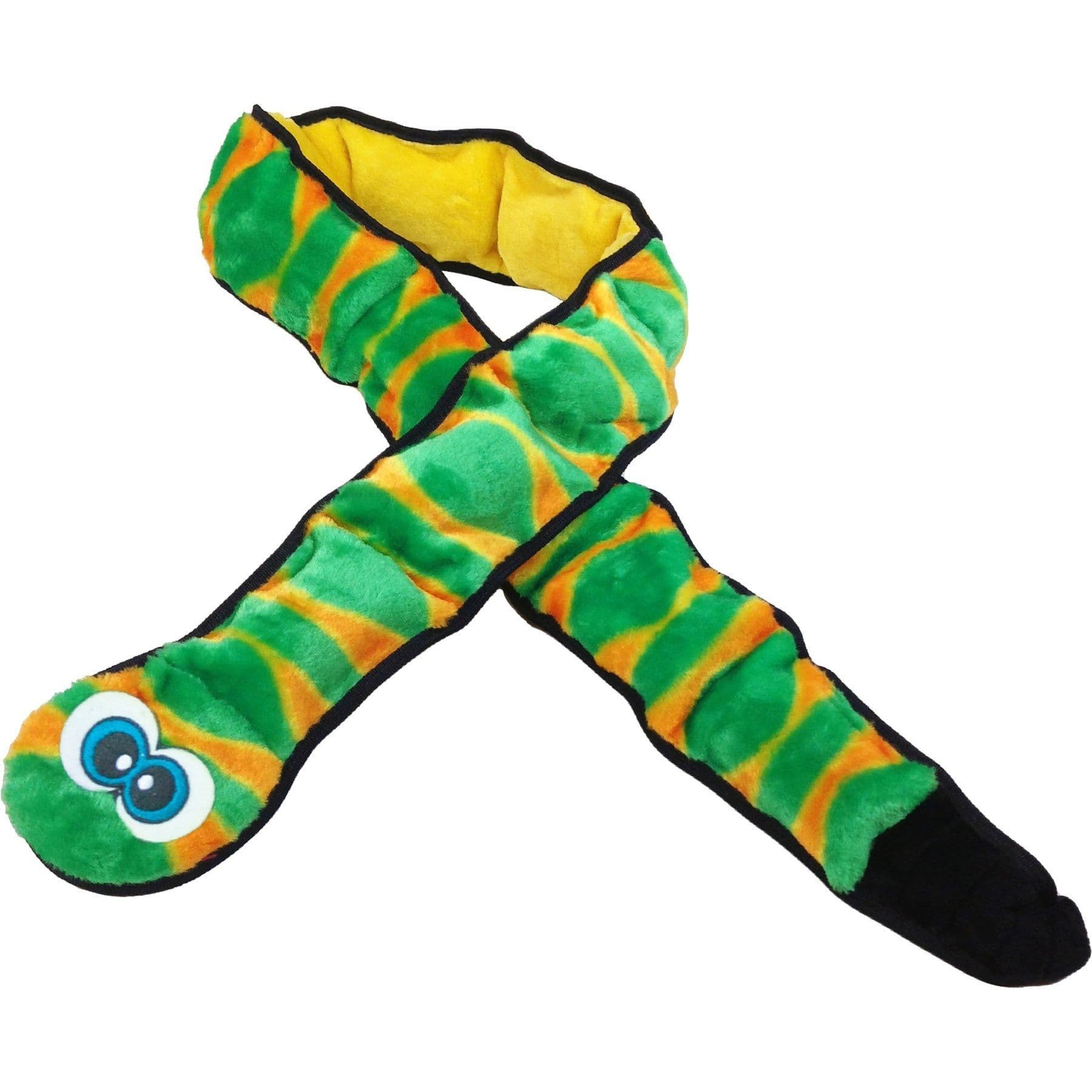
The one soft pick: dual-layer seams and squeakers that keep squeaking when punctured, flagged as supervised-only for shredders.
Petful may earn a commission when you click through to Chewy, at no extra cost to you.
- 1Prey drive is the leading explanation: the squeak resembles the distress cry of small prey
- 2Biting the toy produces immediate sound feedback that some dogs enjoy
- 3The dog controls the noise, which makes the game self-reinforcing
- 4Some dogs target and expose the squeaker; predatory play and interest in sound or texture are possible explanations
You may have read that dogs like squeaky toys for a dark reason. There is some truth in the headline: the sound most likely appeals because it mimics a prey animal’s distress. But the behavior is normal play, not a sign of cruelty or aggression, and play lets dogs rehearse hunting instincts in a safe, harmless way.
Prey drive: what the squeak sounds like to a dog
Prey drive is the motivation to find, chase, and catch moving things. It varies widely: terriers and many herding breeds tend to show a lot of it, while some companion breeds show very little. The squeak likely taps into the auditory part of that drive. Small prey animals often squeal when caught, and a dog’s ears are tuned to pick up exactly those sounds.
Three features of a squeak line up with what a hunting dog listens for:
- Pitch: the sound is high and thin, like a rodent or rabbit cry rather than a bark or a human voice.
- Timing: it starts the instant the jaws close, so the dog links its own bite to the sound.
- Irregularity: squeaks vary with how hard and where the dog bites, which keeps the toy unpredictable, much like struggling prey.
Do high frequencies hurt dogs’ ears? Pitch and loudness are different. Dogs can hear frequencies reaching roughly 45 kHz, but a sound being audible does not establish that its intensity is comfortable or safe. We do not have sound-level measurements for these toys. Stop squeaking if your dog flinches or avoids the sound, and offer a quieter toy.
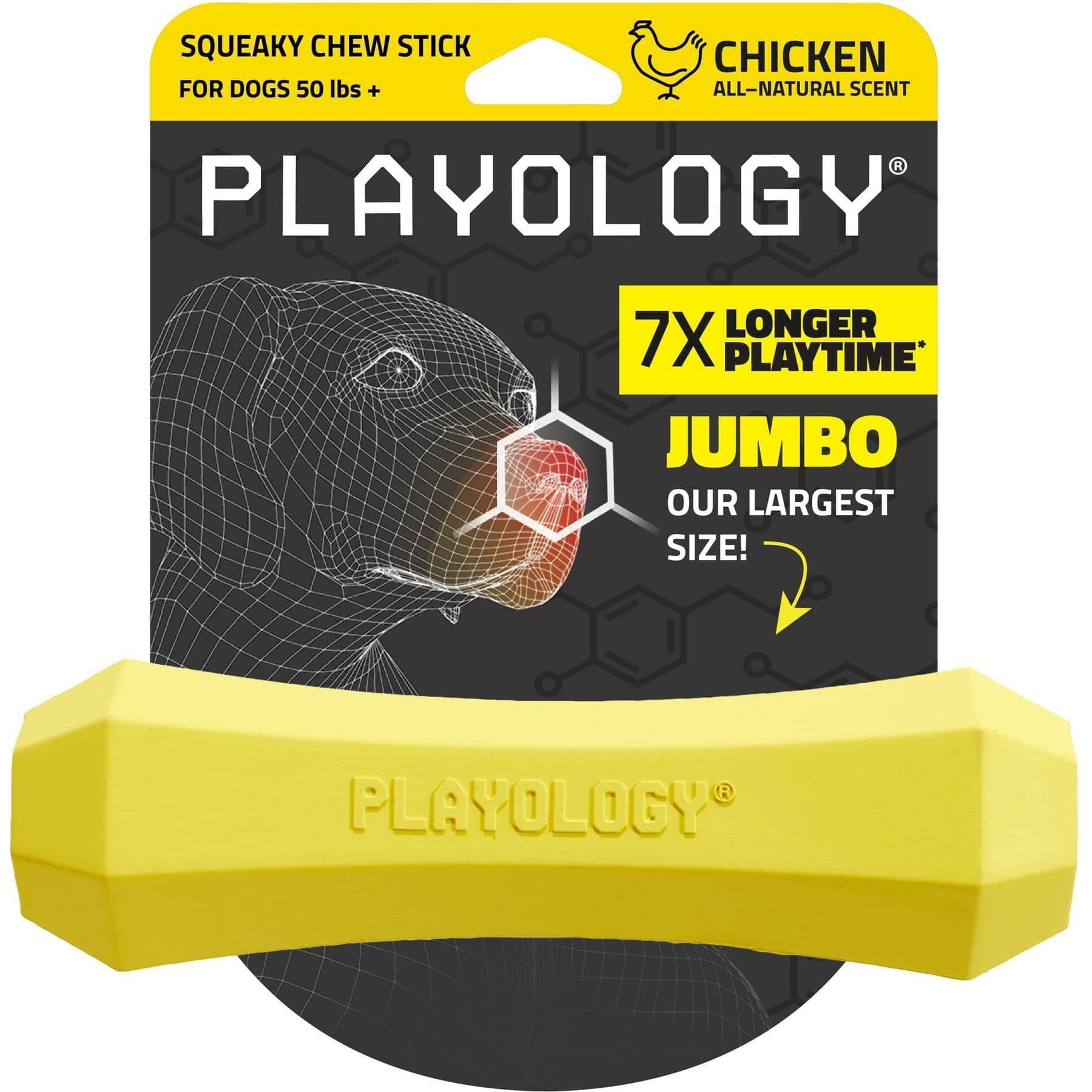
Molded rubber stick with an embedded squeaker and scent for a dog that chews rather than shakes.
Petful may earn a commission when you click through to Chewy, at no extra cost to you.
A toy like the Outward Hound Invincibles Snakes shows how strong the pull of the sound can be. The manufacturer designs it with several squeakers along a stuffing-free body and says the squeakers keep working even after a puncture, which keeps the payoff going for a dog that bites hard.
Watch which part of the game your dog chooses. Some dogs prefer chasing a thrown ball; others enjoy gripping, shaking or chewing a toy. These preferences help you choose an activity, but targeting the squeaker does not establish a particular hunting motive.
The reward loop: why the squeaker is the target
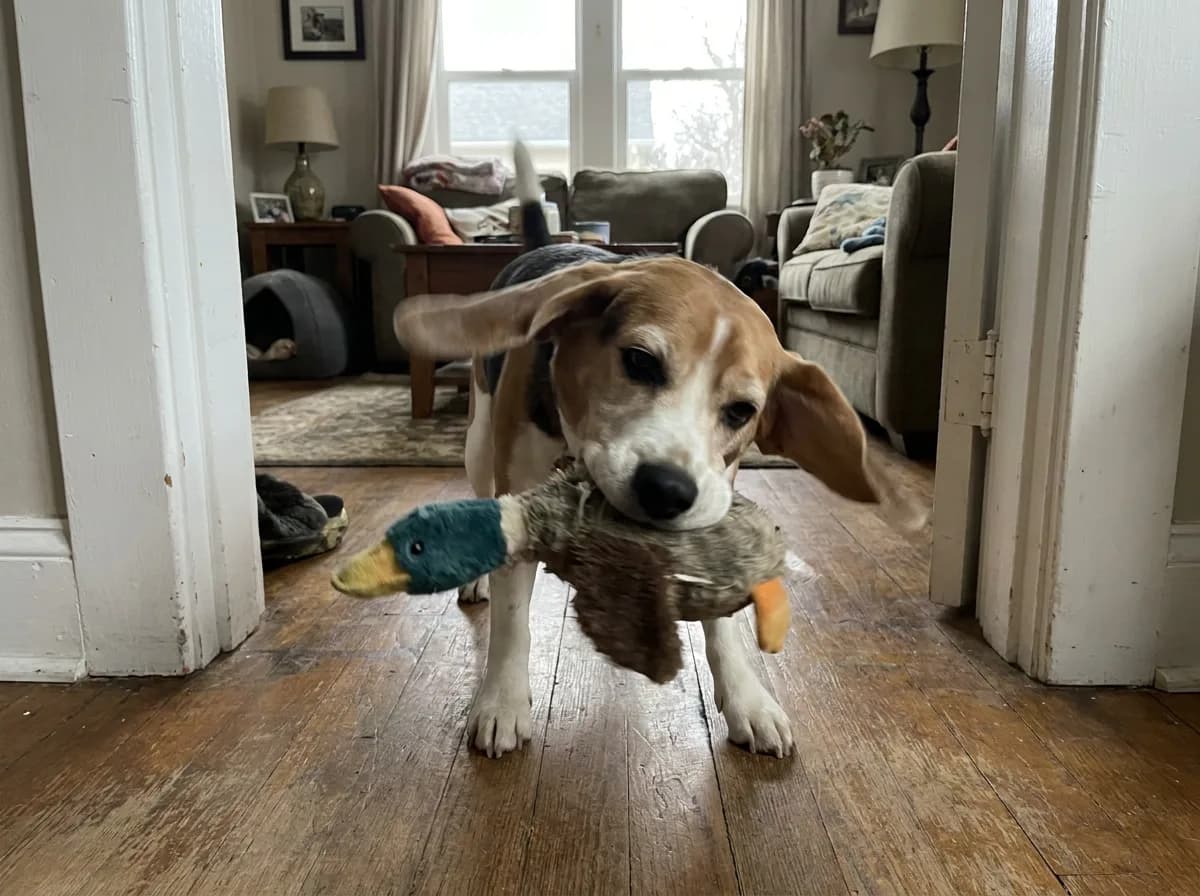
The second half of the explanation is reward. A squeaky toy is one of the few things in a dog’s world that responds immediately and predictably to its own actions. Bite, and it squeals. Bite again, and it squeals again. The dog controls the sound, and behavior that reliably earns a payoff tends to get repeated.
Some dogs focus their chewing on the sound-making part and eventually open the toy. Predatory play and interest in sound or texture are possible explanations, but the behavior does not establish that a dog is trying to restart a silent squeaker. Whatever the motivation, exposed internal parts are a reason to remove the toy.
To make this practical, use a squeak response ladder based on what you observe. These behaviors help guide play and supervision; they do not each prove a stage of the predatory sequence:
- Chase: the dog runs after a squeaking ball and may drop it on arrival. Choose a correctly sized fetch ball, supervise play and remove it if damaged.
- Shake: the dog grabs the toy and whips it side to side. Choose a model intended for that play, supervise the game and watch for torn seams.
- Surgery on the squeaker: the dog concentrates on the sound-making part. Stop play before internal parts become accessible, and remove a damaged toy. An embedded squeaker does not remove the need for supervision.
- Guarding: the dog stiffens, growls, or hides the toy when approached. This is a behavior question before it is a toy question; see the section on when squeaking signals a problem.
Most dogs sit on one or two rungs. Knowing where yours lands is more useful than any generic list of toys.
The predatory sequence and immediate sound feedback offer two useful ways to understand squeaky play. They can help explain chasing, shaking and targeting the squeaker without proving one motive for every dog. Use the behavior you observe to choose the activity and supervision, rather than assuming that removing a squeaker restarts a hunt.
Why dogs destroy squeaky toys (and chew bones and sticks)
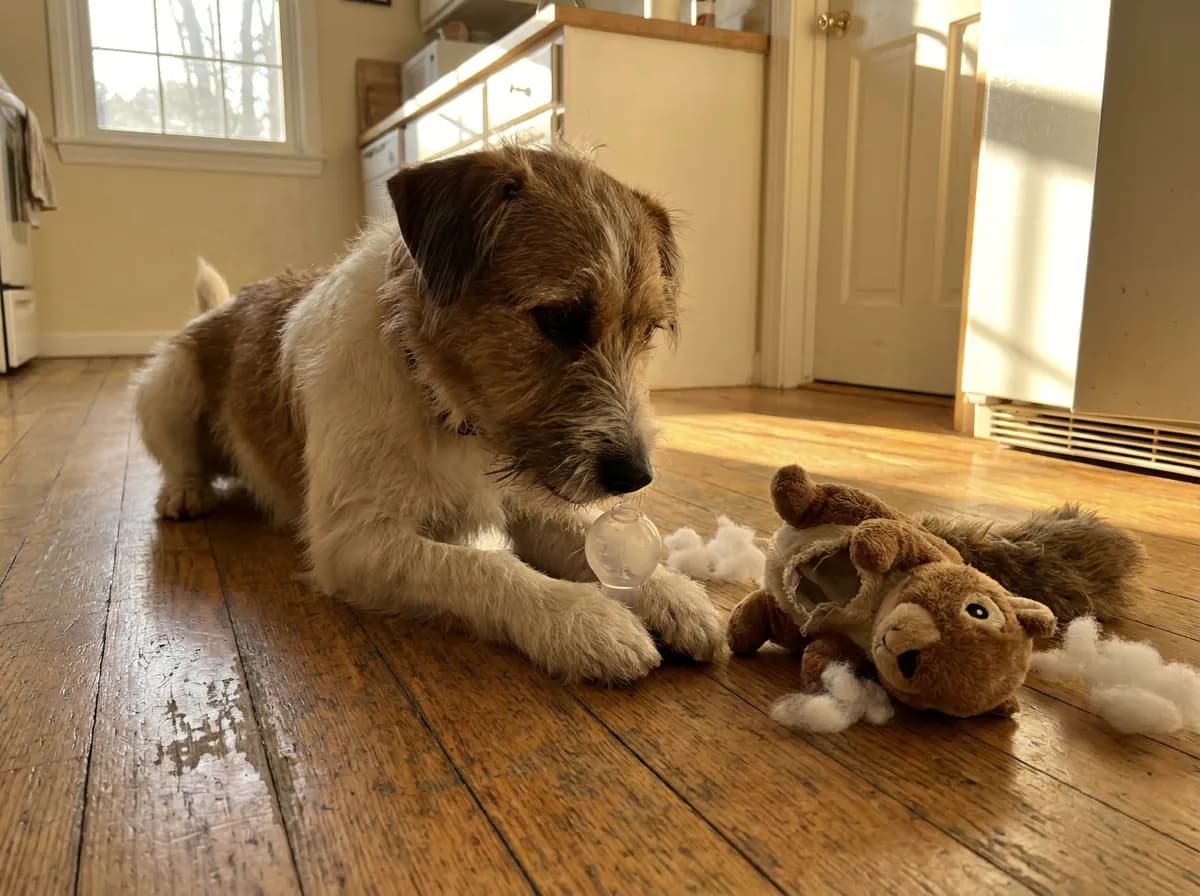
Ripping apart a soft toy can appeal to some dogs, but the action alone does not reveal whether the sound, texture or predatory play is the main attraction. Whatever the motivation, opening a toy can expose pieces the dog could swallow. Remove it when damage makes its filling or squeaker accessible.
Chewing in general serves other needs too. KONG’s guidance on chew toys describes chewing as natural behavior and recommends appropriate sizing, supervised use, and removal of damaged toys. Common drivers of chewing include:
- Teething: puppies chew to relieve sore gums.
- Exploration: dogs investigate new objects with their mouths.
- Energy and boredom: an under-exercised or bored dog often chews more.
For a dog that performs surgery on plush, a molded toy with the squeaker sealed inside is a better match. The Playology Chicken Scented Squeaky Chew Stick pairs an embedded squeaker with a scented rubber body, so the dog gets both the sound and something to work on with its back teeth.
The same instincts explain other chewing questions owners ask:
- Why do dogs like bones? Gnawing a bone is the consume stage of the sequence, and it is satisfying work for the jaw. Do dogs like bones more than meat? Not usually; many dogs simply find a bone a longer-lasting project than a meal that is gone in seconds.
- Why do dogs like bone marrow? Marrow is fatty and strongly flavored, and reaching it takes effort, which keeps the dog engaged. Rich marrow can upset some stomachs, so ask your veterinarian before offering it.
- Why do dogs like chicken bones? They smell and taste like food. Cooked chicken bones are dangerous, though, because they can splinter into sharp pieces; never offer them.
- Why do dogs like chewing on sticks? Sticks are easy to find, carry outdoor smells, and can be shaken and carried like prey. They also splinter, so a durable chew toy is a safer substitute.
If chewing spreads to furniture, shoes, or walls, that is a training and enrichment issue. Our guide on how to stop destructive chewing covers redirection and management step by step.
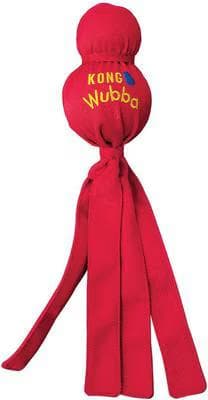
A large fabric-covered dog toy for supervised tug and fetch; choose the size for your dog and retire it if seams or material begin to fail.
Petful may earn a commission when you click through to Chewy, at no extra cost to you.
Beyond the squeaker: tennis balls, crinkle toys, tug, and fetch
Squeakers are only one way toys tap into hunting behavior. Why do dogs like toys at all? Toys give dogs a safe outlet for parts of the predatory sequence that daily life rarely satisfies, and they often come with the bonus of your attention.
Different toys speak to different stages:
- Why do dogs like fetch? A thrown ball triggers the chase stage. Retrievers were bred to bring things back, so fetch also satisfies the retrieving instinct.
- Why do dogs like tennis balls? They bounce unpredictably like fleeing prey, the felt holds scent, and the soft bite feels good. The felt can be abrasive on teeth over time, so many owners rotate in rubber balls.
- Why do dogs like tug of war? Tug mirrors the grab-bite and pulling of a struggle with prey, and it is a cooperative game with you. Played with clear rules, tug does not make dogs aggressive.
- Why do dogs like crinkle toys? The crinkle gives sound feedback for every bite, much like a squeaker, but quieter and without a hard part to extract.
- Why do dogs like chewing toys? Chewing toys lets dogs work their jaws, relieve stress, and pass time, which matters most for dogs left alone.
A ball that squeaks combines chase and sound. The Chuckit! Ultra Squeaker Ball is a rubber ball with a squeaker, which suits dogs whose favorite rung is the chase.
Pick the ball size for your dog’s mouth, not your throwing arm. A ball small enough to slip to the back of the throat is a choking hazard. Follow the exact maker’s size guidance and check mouth fit; a Large label does not establish suitability for every medium or big dog.
Choosing a squeaky toy for your dog’s play style
Use your dog’s observed play style to choose a toy:
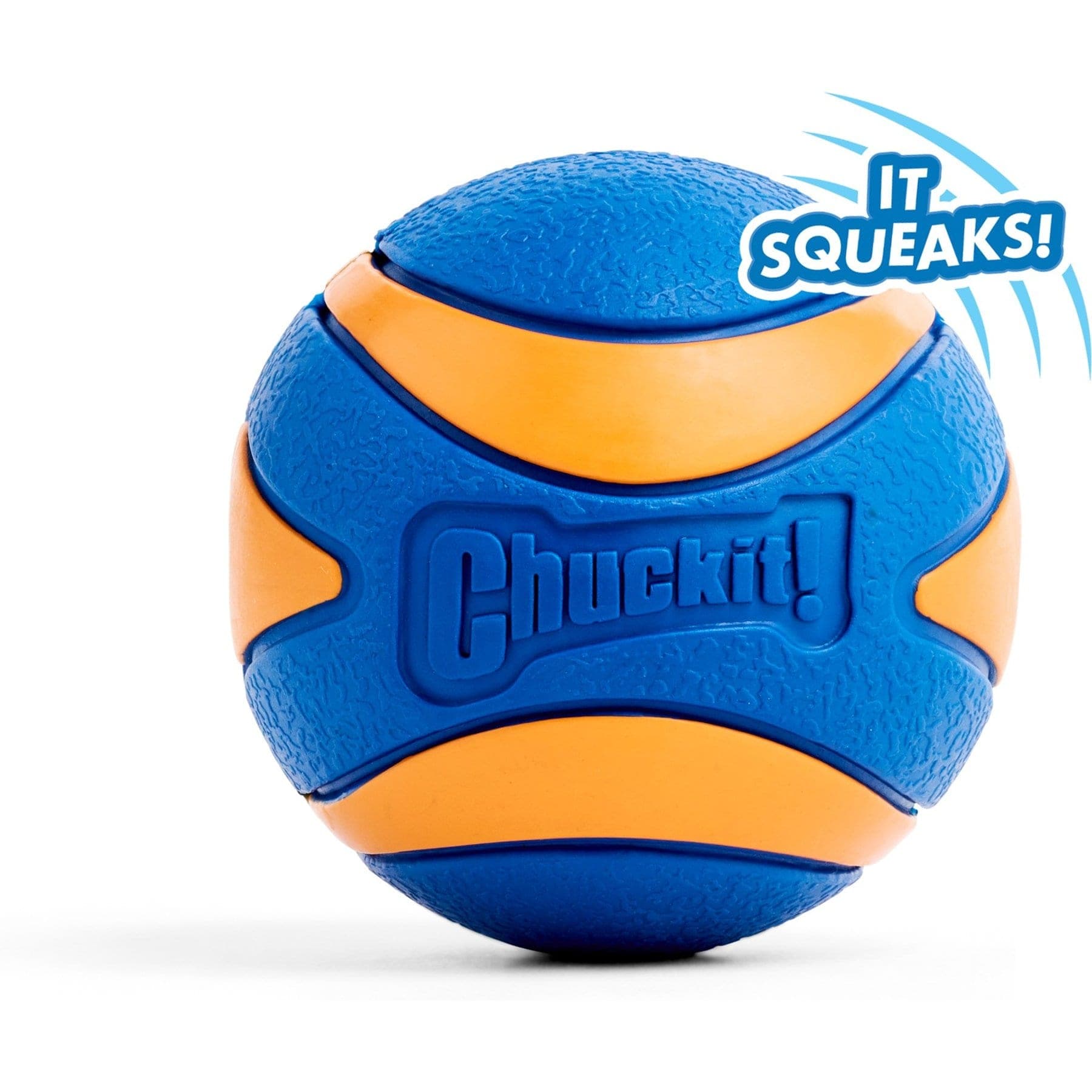
Thick-walled natural rubber ball that replaces felt tennis balls for ball-obsessed chewers.
Petful may earn a commission when you click through to Chewy, at no extra cost to you.
- Chase dogs: rubber squeaker balls and bouncy fetch toys.
- Shakers: toys with long, grippable shapes, such as tug toys or multi-squeaker snakes.
- Dogs that target squeakers: choose only a model intended for the way your dog plays, and remove it if the dog tries to tear it apart. No-stuffing construction does not remove the squeaker.
- Guarders: avoid confrontations over the toy and seek qualified behavior advice if guarding affects safe play.
For the shake-and-tug stage, the KONG Wubba is a popular choice: a ball-and-tail design that is easy to grab, shake, and tug, with an outer fabric cover. Because it has fabric, it suits shakers better than determined destroyers.
No squeaky toy is indestructible. A few buying rules help:
- Check fit: start with the exact manufacturer’s size guidance, then assess mouth fit and chewing style.
- Buy for the dog you have, not the toughness claim on the package.
- Expect to replace toys, and treat a guarantee as a refund or replacement policy with conditions, not a safety promise.
If your dog destroys every squeaker within minutes, see our picks for squeaky toys for strong chewers. If the problem is every toy, not just squeakers, our guide to indestructible dog toys covers the toughest options. A no-stuffing plush like ZippyPaws Skinny Peltz can also work for dogs that love squeakers but scatter stuffing.
Puppies need extra care: their teeth and jaws are still developing and they explore everything with their mouths. Start with our list of safe chew toys for puppies before buying squeakers for a young dog.
When a dog does not like squeaky toys, and when squeaking signals a problem
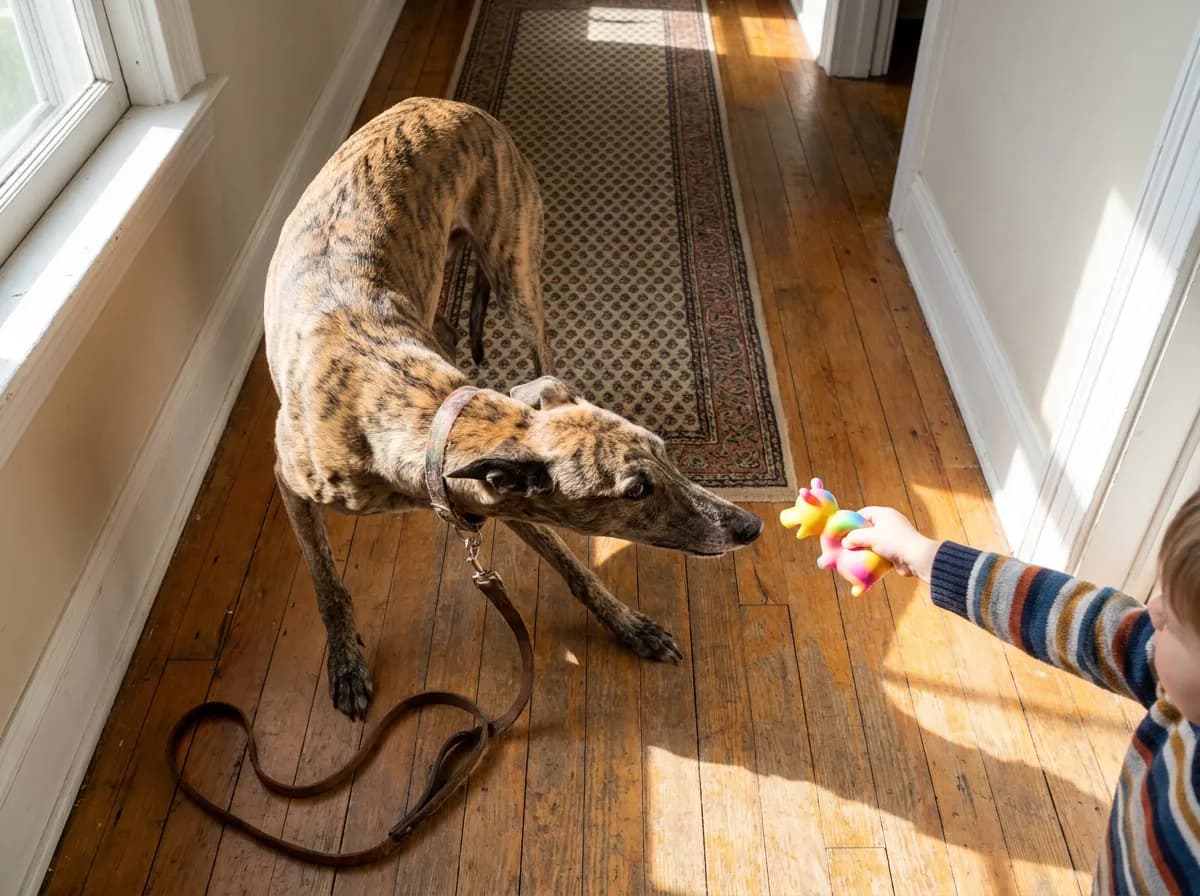
Why do some dogs not like squeaky toys? Prey drive varies a great deal, so some dogs simply find the sound uninteresting. Others are sound sensitive and find a sudden squeal startling. A dog that had a bad experience, or that never played with toys as a puppy, may also ignore them.
If you are asking “why does my dog not like squeaky toys,” watch the body language to tell indifference from fear:
- Indifference: relaxed body, a quick sniff, then the dog walks away or picks a different toy.
- Mild unease: a head turn, blinking, or lip licking when the toy squeaks nearby.
- Fear: ears pinned back, tail tucked or low, trembling, or leaving the room when the toy squeaks.
A fearful dog should not be pushed to play with a squeaker. Squeaking the toy repeatedly to “get them used to it” can make the sound more upsetting, not less. Try a quiet rubber toy, a crinkle toy, or a food puzzle instead, and let the dog choose how close to get. Older dogs with changing hearing, and dogs recovering from a scare, sometimes lose interest in squeakers they once loved; a sudden change like that is worth mentioning at your next vet visit.
What is a noise that dogs hate? Many dogs dislike sudden, loud, or unpredictable sounds such as fireworks, thunder, and vacuum cleaners. For a sound-sensitive dog, a squeaker can fall in the same category, especially at close range. Does the squeak frequency hurt a dog’s ears? Frequency alone cannot answer that: loudness and the circumstances of exposure also matter. Do not use a dog’s ability to hear a high-pitched sound as proof that the sound is comfortable. Whether it bothers a particular dog shows in body language: a dog that flinches, backs away, or paws at its ears is telling you to switch to a quieter toy.
Do squeaky toys make dogs aggressive? Whether a dog is gentle or pushy, squeaky toys do not create aggression, but they can raise a dog’s arousal level, and an overexcited dog may get mouthy or snappy. Signs that play has tipped into a problem include:
- Stiffening, freezing, or growling when a person or another dog approaches the toy.
- Hard stares or snapping during play that does not stop when you call a break.
- Fixation the dog cannot be interrupted from, even with treats.
Guarding toys is called resource guarding, and it deserves help from a qualified trainer or veterinary behaviorist, especially in homes with children or other pets. Remove the toy that triggers it while you work on the behavior.
Squeaker safety: swallowed squeakers and supervision
A swallowed squeaker can cause a blockage in the stomach or intestines. Contact a veterinarian promptly after suspected ingestion, even if your dog seems comfortable. Describe the toy and the missing component, and follow the veterinarian’s instructions rather than waiting for symptoms or trying to make your dog vomit.
Swallowed squeaker warning
- If you think your dog swallowed a squeaker or pieces of a toy, call your veterinarian right away. Warning signs include vomiting, retching, drooling, loss of appetite, belly pain, straining, or lethargy. Do not try to make your dog vomit unless your vet tells you to. Check toys after every session, and discard the toy once seams tear or the squeaker is exposed.
Practical checks for squeaky play:
- Supervise squeaky-toy play and inspect the toy for damage.
- Check the exact manufacturer’s size guidance, then assess mouth fit and how your dog handles the toy.
- Put destructible toys away when you leave the house.
Make sure everyone in the household knows when to remove a toy and when to seek help:
- The swallowed-squeaker rule: if a squeaker or toy pieces may have been swallowed, call your veterinarian right away instead of waiting to see if it passes.
- The torn-plush rule: remove a plush toy when a seam tears, stuffing becomes accessible or the squeaker is exposed. Follow any applicable return instructions before disposing of it.
For a dog that destroys plush toys, consider a rubber squeaker toy intended for its chewing and play style. A molded-in squeaker is a useful construction feature, not a promise of survival. The selection section above links to specific options.
Why dogs like squeaky toys FAQs
Frequently Asked Questions
Partly, yes. The leading theory is that the squeak resembles the distress call of small prey, which appeals to a dog’s hunting instincts. That is not a sign of a violent dog; it is normal play that lets the dog act out instincts harmlessly.
No, but they can raise a dog’s arousal level during play. If your dog growls, freezes, or snaps when someone nears the toy, that is resource guarding, and a trainer or veterinary behaviorist can help.
Yes, with supervised play and the right size. A teething puppy chews hard and may pull out a squeaker, so choose sturdy puppy toys and put them away when you cannot watch.
Some dogs treat a favorite toy as a comfort object, and many retrievers carry items gently thanks to their retrieving instinct. Carrying a toy to greet you is normal and usually a sign of excitement.

Coreen Saito is a pet writer and longtime shelter volunteer with more than a decade in animal rescue. She covers cat behavior, breed care, and the small, ordinary science of sharing a life with companion animals, with a particular focus on honest takes about the products and decisions that actually matter. At home in Arizona, she’s outranked by Mac (a dog with the loudest opinion in the house), Rebel (a cat who governs by quiet authority), and Meri (an orange tabby who runs the late shift and the laundry basket). She writes about all three, plus the rescues that keep coming through her life, at LifeWithMinty.com.


