
Cat tree safety depends on the individual tree, the way it is assembled, and the route your cat can use. Overall height and a wide-looking base do not answer all of those questions. Check the supporting structure, manufacturer information, platforms, and room placement together.
Use the same approach whether you are buying a new tree, moving an existing one, or considering a used model. A loose connection may have an instruction-led correction. A damaged support needs a different decision. The aim is to identify the actual issue before adjusting, cleaning, repairing, or replacing anything.
Check the Base and Structure Before Your Cat Climbs
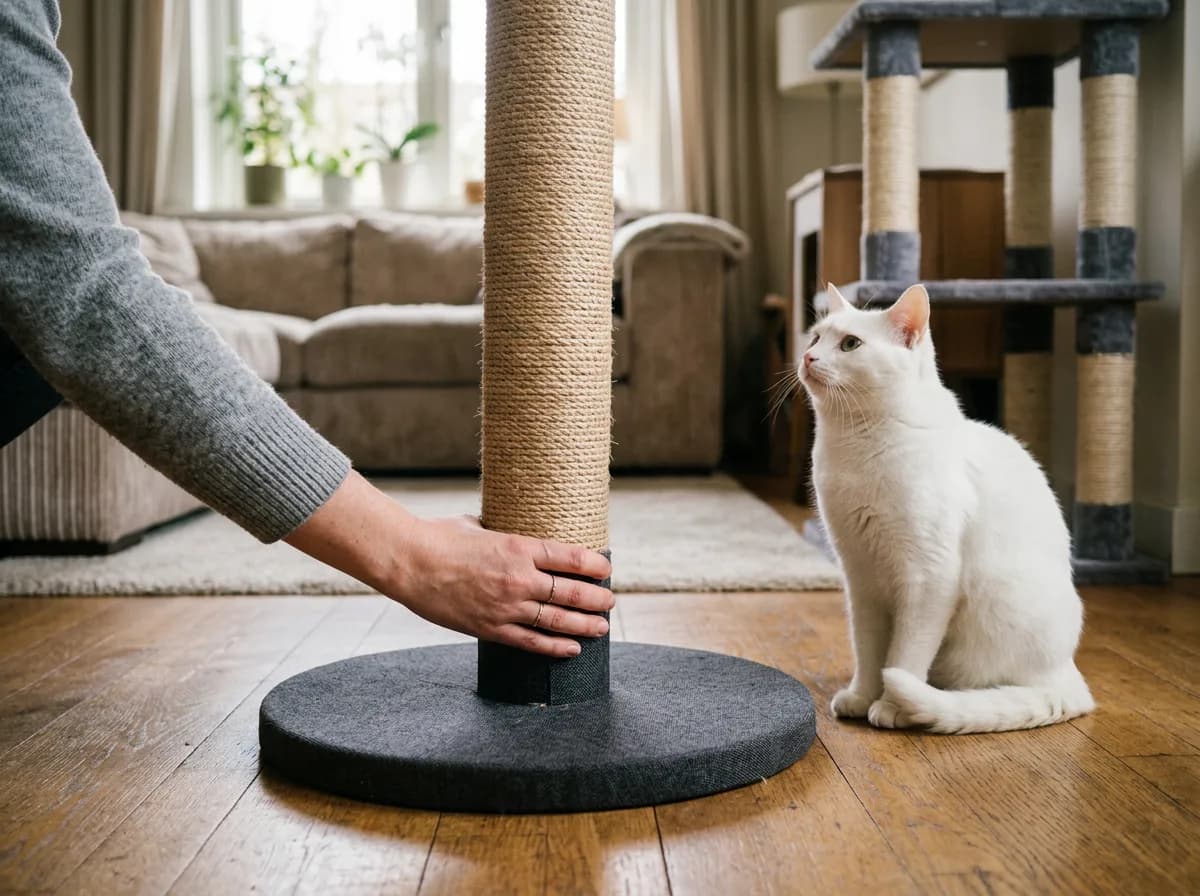
Start with the tree empty and assembled in its intended location. Look at how the base sits on the floor, how the supports meet it, and whether the platforms are attached as shown in the instructions. Check for missing parts, cracks, bent fittings, or connections that have separated.
- 1Start with a sound structure, a usable route, and appropriate placement.
- 2Follow the exact model’s manufacturer instructions for assembly, attachment, and maintenance.
- 3A hand check can reveal movement, but it does not establish a load rating or certify the tree.
A gentle hand check can help you notice movement at the base or a joint. It is not a certified load test, proof against tipping, or a reason to exceed a manufacturer’s limit. Do not climb on the tree or load it with improvised weights to establish a capacity.
Check the Base and Structure Before Your Cat Climbs comparison
| Factor | Check before use | What the check cannot establish |
|---|---|---|
| Base stability | Contact with the intended floor and visible movement | A certified tipping threshold |
| Structural joints | Correct parts, assembly, and secure connections | The condition of concealed material |
| Usable platform | Space available for the cat’s body and movement | A load rating based on size alone |
| Accessible route | Practical steps up, down, and away | Suitability for every cat |
| Scratcher placement | Clear approach without blocked exits | That a preferred location fixes structural damage |
If movement comes from loose assembly, compare the affected connection with the manufacturer instructions. If you find a damaged supporting component, stop use until the component or tree has been properly replaced. Tightening repeatedly is not a substitute for addressing a connection that will not hold.
Distinguish movement of the whole base from movement at an individual joint. A base rocking on an uneven spot and a platform moving around its connection need different corrections. Check the floor position and the assembly details separately. Do not hide a rocking base with a loose object that can shift or obscure the condition you need to inspect.
An adjustable cat tree needs its specified adjustment and locking method checked too. Increasing its height or changing its configuration may alter the setup requirements. Keep the instructions for the configuration you actually use.
Read Weight Limits and Usable Platform Dimensions
Look for a manufacturer limit attached to the exact model. Then read what that limit describes. A per-platform rating applies to the named platform; a per-cat statement describes an individual animal; a total unit limit describes the combined load covered by that statement. Those phrases are not interchangeable.
Do not multiply a per-platform figure by the number of beds unless the manufacturer explicitly supports that calculation. Likewise, a total limit does not tell you how much one shelf can carry. When the information you need is not provided, ask the manufacturer rather than filling the gap from a similar-looking tree.
The TRIXIE Baza Junior model 44547 assembly sheet illustrates the distinction between assembly information and a load rating. Its model identification and component list help identify the product and its parts. A component’s dimensions are measurements, not a capacity statement.
Baza Junior: model, component information and load limits
| Manufacturer document item | What it establishes | What it does not establish |
|---|---|---|
| Baza Junior, model 44547 | Cream model listed as 38.5 inches (98 cm) high | Specifications for another Baza model |
| Component list | Bottom plate, condo, hammock, top bed, platform, cover plate, posts, and fasteners | A structural test result |
| Component dimensions | Top bed listed as 18.5 × 10 inches (47 × 26 cm) | A per-platform or total unit capacity, or the clear interior resting area |
| Load limit not stated | This sheet does not provide a load rating | Unlimited capacity or a rating inferred from appearance |
The sheet also assigns different part numbers to posts of different lengths. That matters when replacing one: a post’s position in the diagram and its part identifier provide a more precise match than the words “replacement scratching post.” Keep the model information with the tree so future repairs can start from the same document.
Measure usable platform space separately. Raised edges, posts, and a shaped bed can reduce the area available for resting or turning. Compare that space with how your cat actually lies down, rather than relying on the outside dimensions alone.
For a cat tree for large cats, a wall-mounted cat tree, or a floor-to-ceiling cat tree, use our cat-tree comparison to compare formats and fit. Each still needs its own load information and installation requirements. A wall or ceiling connection changes the supporting arrangement; it does not remove the need to read the exact model’s limits.
Match Height to the Route Your Cat Can Use
Evaluate the whole route, not a universal safe height. Start at the floor and trace the path to each resting area, then trace the route back down. Look at the distance between usable surfaces, the room for turning, the surface grip, and the landing area.
A tree can offer an easy ascent but an awkward descent if a shelf is offset or blocked. A wide top bed does not solve a difficult step below it. Nearby furniture may also create a route you did not intend, including a jump to a higher or less stable surface.
- Check the first step from the floor.
- Look for usable landing areas between levels.
- Check traction and loose coverings on each step.
- Allow room to turn and descend.
- Keep the final landing area clear.
Watch the individual cat’s voluntary use without placing the cat on a high platform to test it. Note hesitation, repeated scrambling, or avoidance of a particular transition. Those observations help identify a route that needs changing; they do not establish a numerical height limit for other cats.
For a cat tree for kittens, accessible first steps and reachable scratching areas deserve particular attention. Our kitten scratching posts and first cat trees guide covers that first-purchase decision. Reassess the arrangement as the kitten grows rather than assuming either a kitten label or a small body size makes every route suitable.
A lower, stepped arrangement can be worth comparing when the present route no longer fits. The step spacing, landing areas, and cat’s individual ability still matter. Lower overall height is one characteristic, not a guarantee.
Place the Tree Away From Avoidable Hazards
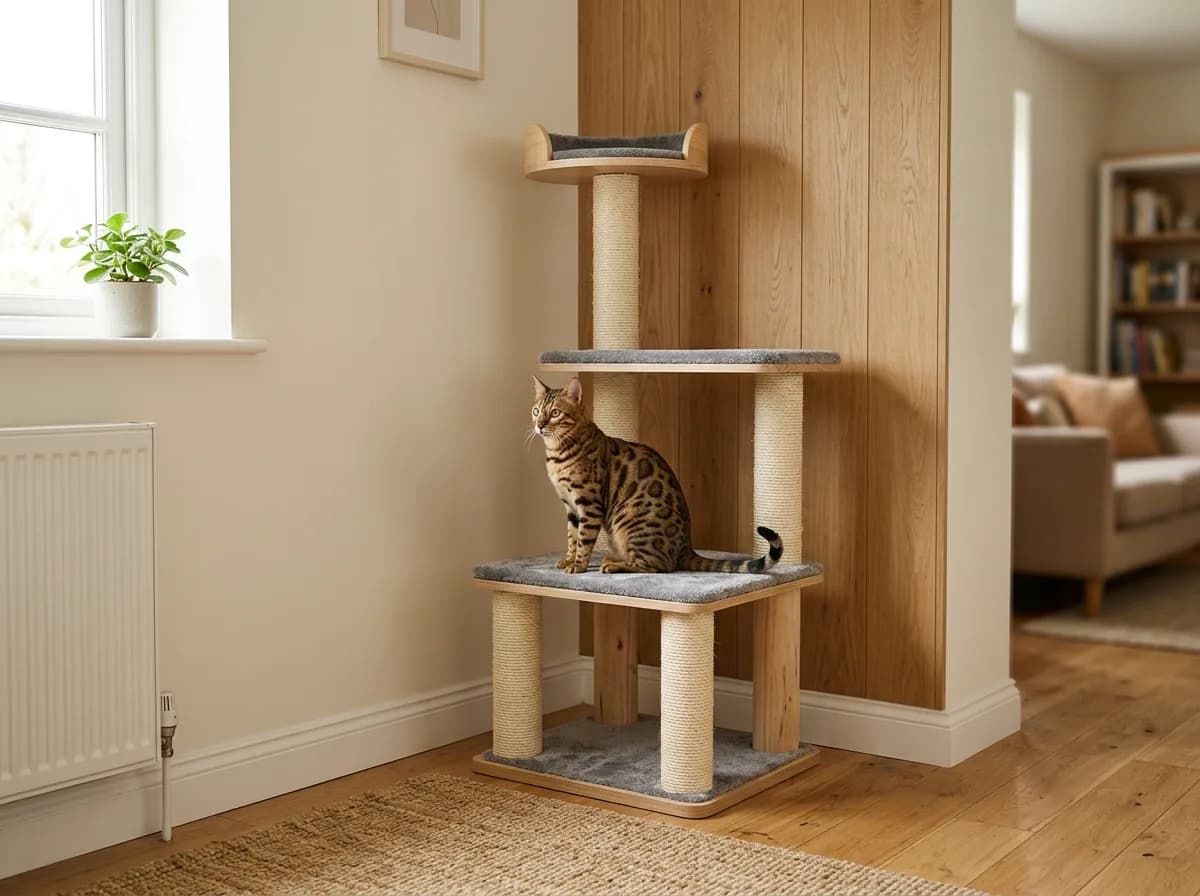
Choose a position with a clear approach and an open route away from the tree. Check the room while doors, drawers, and nearby furniture are being used normally. A convenient corner may become obstructed when a door opens or a chair moves.
Look beyond the base footprint. A cat may step or jump from the tree to adjacent furniture, windowsills, or shelves. Consider whether those surfaces are stable and whether the route leads toward cords, breakable objects, or other things you do not want within reach.
- Keep blind and curtain cords out of reach.
- Assess nearby windows and their secure operation.
- Check separation from heaters and other heat sources.
- Leave a clear landing area around accessible platforms.
- Check adjacent furniture for unintended or unstable jump routes.
A window view can make a resting spot appealing, but it does not make every window-side position suitable. Similarly, setting a tree beside a wall does not anchor it. Position and attachment are separate checks, and both should match the product instructions.
Scratcher placement can affect whether the scratching surfaces are used. If your goal is to stop cats from scratching furniture, place an appropriate scratching alternative near the relevant activity and see our scratching-post placement and redirection tips. That guide addresses scratching behavior and alternatives to relying on a sofa spray. A spray cannot correct a blocked route or unstable tree.
Recheck the location after rearranging the room. A tree that remains in the same place can acquire a new hazard when a lamp, heater, chair, or curtain cord moves beside it.
Anchor or Mount It According to Its Instructions
Use the exact product instructions to decide how to secure a cat tree. Some products specify a wall attachment, a particular mounted installation, or a floor-to-ceiling setup. Follow the method supplied for that design rather than treating every tree as a freestanding unit.
Identify the mounting surface before choosing or fitting hardware. Instructions may distinguish wall construction, attachment points, or suitable support. A fastener that fits through a bracket is not automatically suitable for the wall behind it.
- Confirm the model and intended configuration.
- Find the specified attachment points and hardware.
- Check the requirements for the wall, ceiling, or other mounting surface.
- Complete the installation in the stated sequence.
- Check the finished connections and retain the instructions.
If the instructions do not explain your wall type or intended installation, get that detail from the manufacturer before improvising. Do not substitute a generic screw rating for guidance about the complete connection. The bracket, fastener, wall material, and tree attachment must work together.
A wall strap should not be used to disguise a broken base or damaged support. Attachment can be part of the intended design, but the tree’s own components must still be sound. Likewise, wedging a tree between furniture does not reproduce an approved mounting method.
After moving, disassembling, or adjusting the tree, repeat the relevant installation checks. For an adjustable or floor-to-ceiling design, use its specified tensioning or locking procedure. Do not assume the previous setting remains correct in a different position.
Inspect Posts, Fasteners, Fabric, and Hanging Toys
Inspect both the surfaces your cat touches and the connections supporting them. Start at the base and work upward so you do not miss a lower joint while focusing on a worn top bed. Check again after moving the tree or noticing new movement.
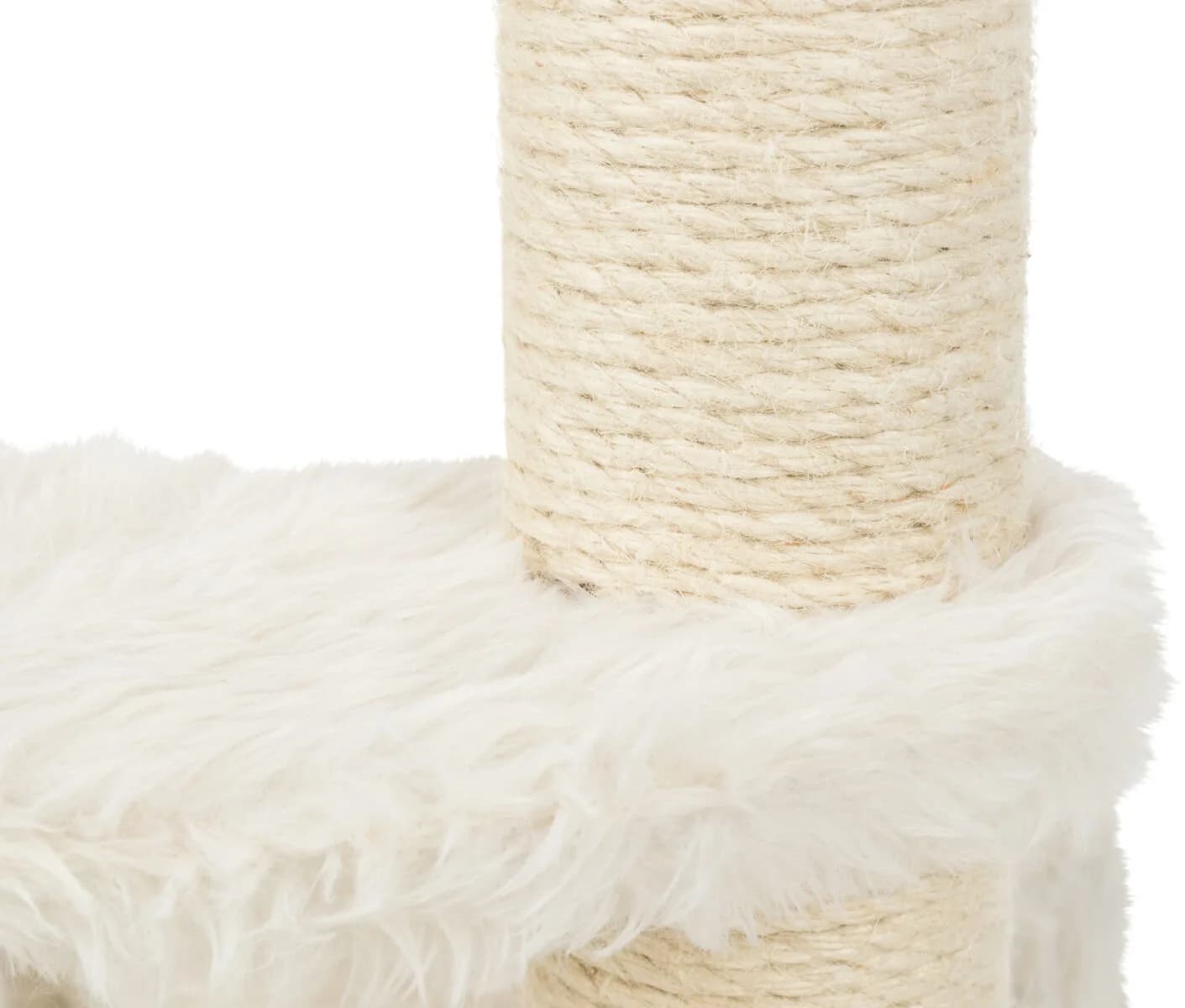
The post-platform junction in the photograph below shows where two components meet. The fastener is concealed. Use the matching assembly diagram to identify the connection rather than assuming the photograph proves that the fitting is present or secure.
Condition-specific inspection actions
| Inspection finding | Next action | Reason to stop use |
|---|---|---|
| Loose fastener | Follow manufacturer instructions for the exact connection | The connection will not hold or a component is damaged |
| Exposed hardware | Identify the failed covering or attachment and correct it | The hardware remains accessible where the cat contacts it |
| Loose wrapping | Check the surface and underlying component | Strands or unsecured material remain accessible |
| Damaged support | Identify an exact replacement or replace the tree | The supporting part is cracked, broken, or otherwise compromised |
| Damaged hanging toy or loop | Follow the product’s removal or replacement guidance | The attachment or toy is no longer intact |
| Loose platform covering | Check attachment and the surface beneath it | The covering shifts or hides unresolved damage |
A worn surface and a damaged support can occur together. Pulling a fresh cover over the area does not establish that the underlying part is sound. If a joint repeatedly loosens after the instructed correction, stop treating it as an ordinary maintenance adjustment and investigate the connection.
Look under the platforms where you can inspect them without unsafe handling or unapproved disassembly. A loose fabric edge may expose a connection that was previously covered, while intact upholstery can conceal the support underneath. Neither appearance alone proves the joint is sound. Use the assembly diagram to work out what should be present.
Check hanging toys, strings, and loops as separate components:
- Look for attachments that have changed or loosened.
- Check for loose parts or damage from play.
- Do not knot, extend, or replace a dangling attachment with an improvised cord merely to keep the toy in place.
Match the correction to the finding. Renewing a worn scratching surface addresses that surface; replacing a damaged fitting addresses the connection. After either job, check the neighboring parts that rely on it. A repaired section should return to the intended assembly, without extra dangling material or a changed route.
Record the model and part identifiers before ordering cat tree replacement parts. A replacement must match its position and connection, not just resemble the original in a photograph. Reassemble according to the relevant instructions and inspect the complete unit again.
Clean and Assess a Used Cat Tree
For a used cat tree, begin with source history and condition. Ask how it was stored, whether it was damaged or repaired, and whether its care instructions and parts information are available. Unknown history does not tell you exactly what is wrong, but it can leave important cleaning or structural questions unanswered.
Before accepting a secondhand tree, request photographs of its base, underside, joints, and worn areas as well as the overall view. Ask whether all original fittings are included. This helps you identify missing information before moving a large item into the home, though the photographs do not replace a hands-on condition check.
Assess each component separately. A removable cushion, fixed plush covering, wrapped post, and exposed hard surface may have different care requirements. “Washable cushion” does not mean the assembled tree can be soaked or placed outside for a hose-down.
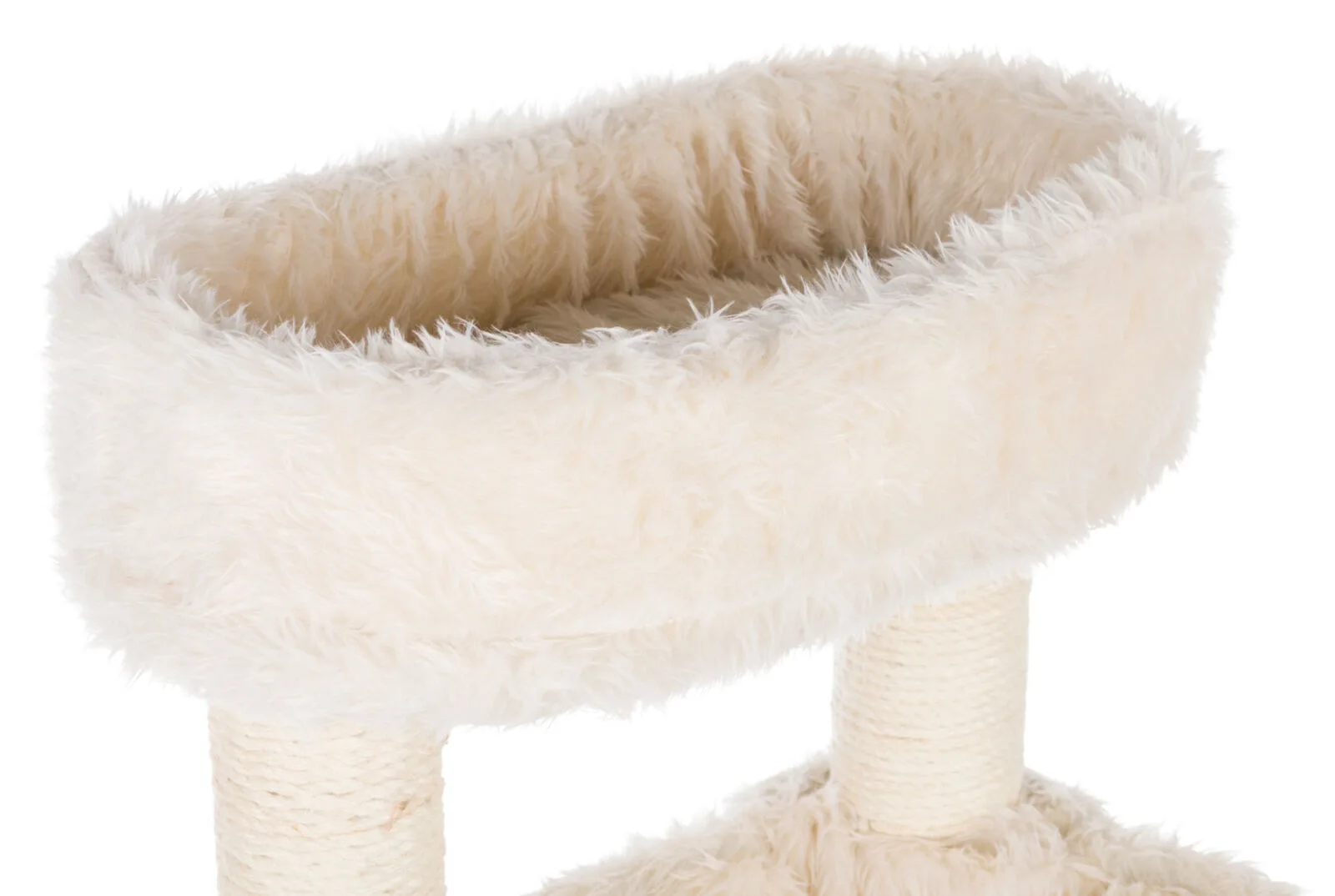
The Baza Junior product information identifies a removable top bed and hand-wash care for its reversible cushion. That example shows why the instruction must be matched to the component. The installed-bed photograph does not show a disassembly procedure or establish that every surface has the same care method.
Separate cleaning from disinfection. Cleaning removes dirt and germs; disinfection uses a suitable product to kill germs. The CDC’s pet-supplies guidance recommends following item-care instructions and disinfectant labels, including the stated contact time and complete drying before pets return.
- Identify what can be removed and how each part may be cleaned.
- Remove loose hair and debris using a method suitable for the surface.
- Follow the component’s care directions.
- If disinfection is needed, check surface compatibility and the product label.
- Keep the cat away during treatment and until the required drying is complete.
- Inspect and reassemble the dry components before use.
A brief spray and immediate wipe do not necessarily meet a disinfectant’s contact time. Conversely, saturating an absorbent component may conflict with its care instructions. Do not mix cleaning chemicals or improvise a stronger solution to compensate for a surface you cannot adequately treat.
If a component cannot be cleaned adequately by a compatible method, compare a documented replacement with replacing the tree. Persistent uncertainty about contaminated absorbent material is a different issue from removable dust. Cleaning also cannot restore a damaged base, failed joint, or missing structural part.
Repair, Replace, or Choose a Lower Setup
Choose the next action from the condition you found. A cleanable surface may need routine care. A replaceable component may let you keep the rest of a sound tree. Structural damage requires a compatible structural replacement or a different tree, not a cosmetic cover.
Repair, Replace, or Choose a Lower Setup comparison
| Condition | Useful option | Boundary |
|---|---|---|
| Cleanable surface on a sound structure | Follow the component’s care instructions | Cleaning does not repair damage |
| Worn replaceable component | Obtain the exact compatible part | Similar appearance does not establish fit |
| Surface wear with uncertain support | Inspect the supporting component before repair | An exterior photo cannot confirm internal condition |
| Structural damage | Stop use and replace the affected structure or tree | Fresh wrapping does not restore support |
| Route no longer suits the cat | Compare a lower or differently stepped arrangement | Lower height alone is not a safety guarantee |
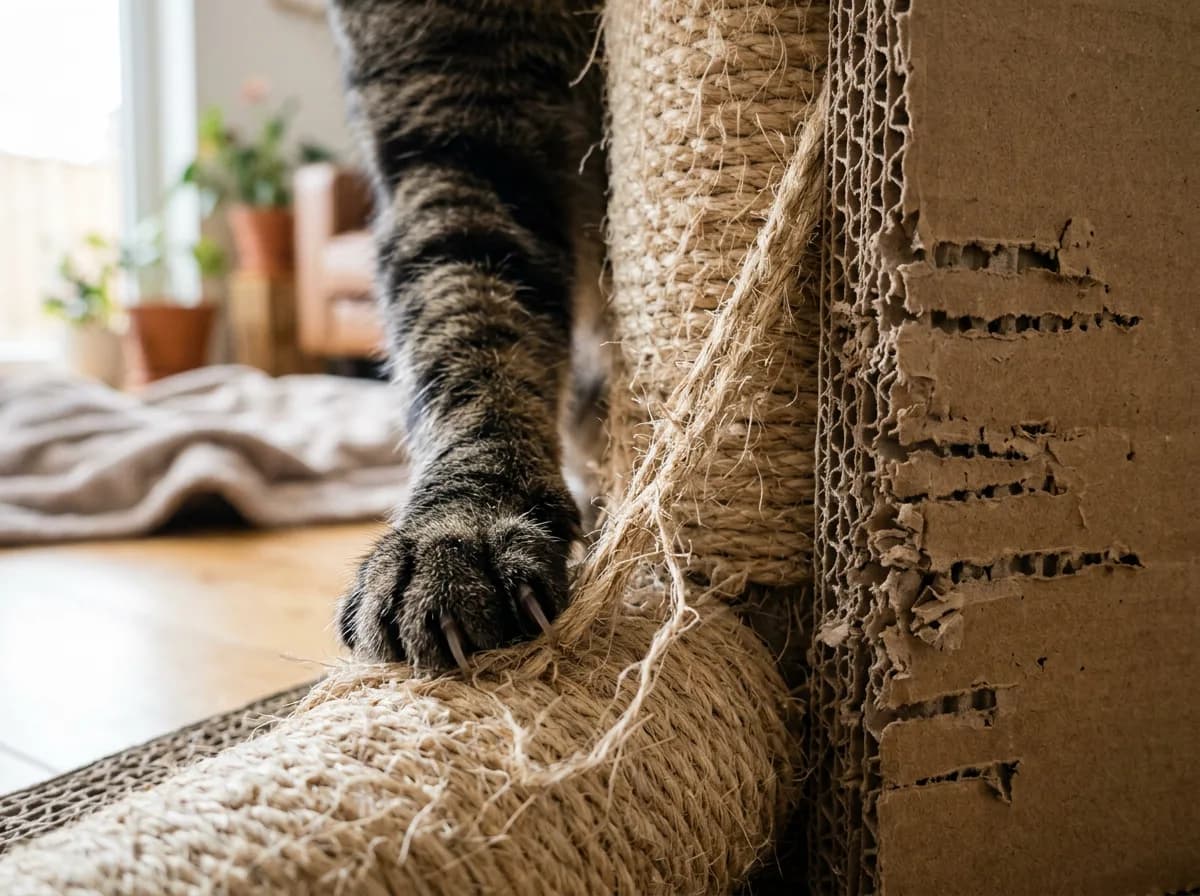
For a worn scratching surface on a sound component, our scratching post materials guide explains replacement and repair decisions. Cat scratching post replacement rope must suit the actual component and repair method. Rewrapping is not a general way to repair a cat scratching post with a cracked support, failed fitting, or damaged base. Resolve that underlying condition first.
Compare a lower stepped option
The TRIXIE Baza Senior 27.6-in Cat Scratching Post, Gray is a lower-format option with staggered platforms below its top resting bed. Compare that arrangement when the current route is the reason for replacing a tree.
Check the actual step distances, landing areas, bed size, and route back down against your cat’s abilities. Its 27.6-inch overall height and “Senior” name do not establish suitability for every older cat or provide a treatment claim. It still needs correct assembly, stable placement, and inspection.
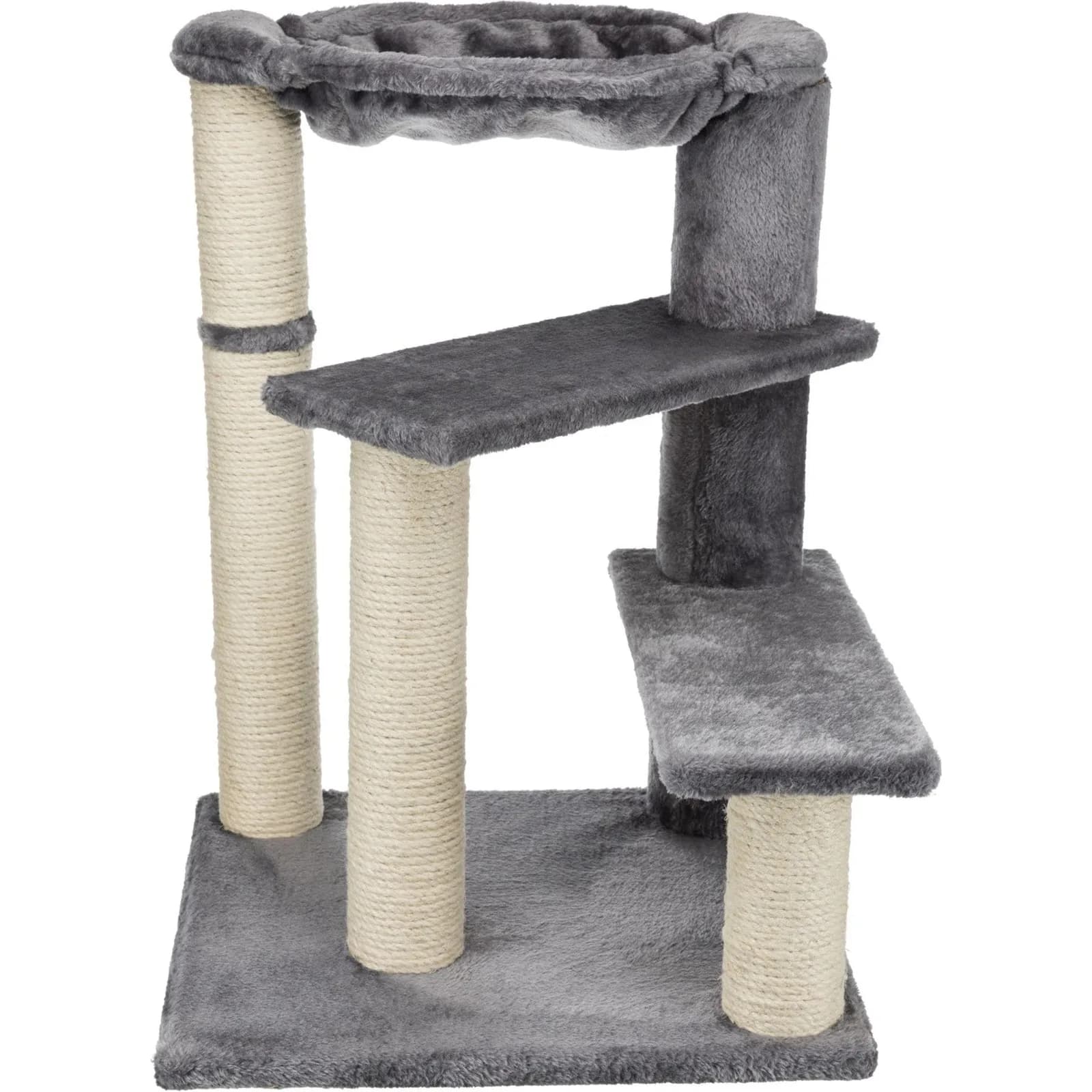
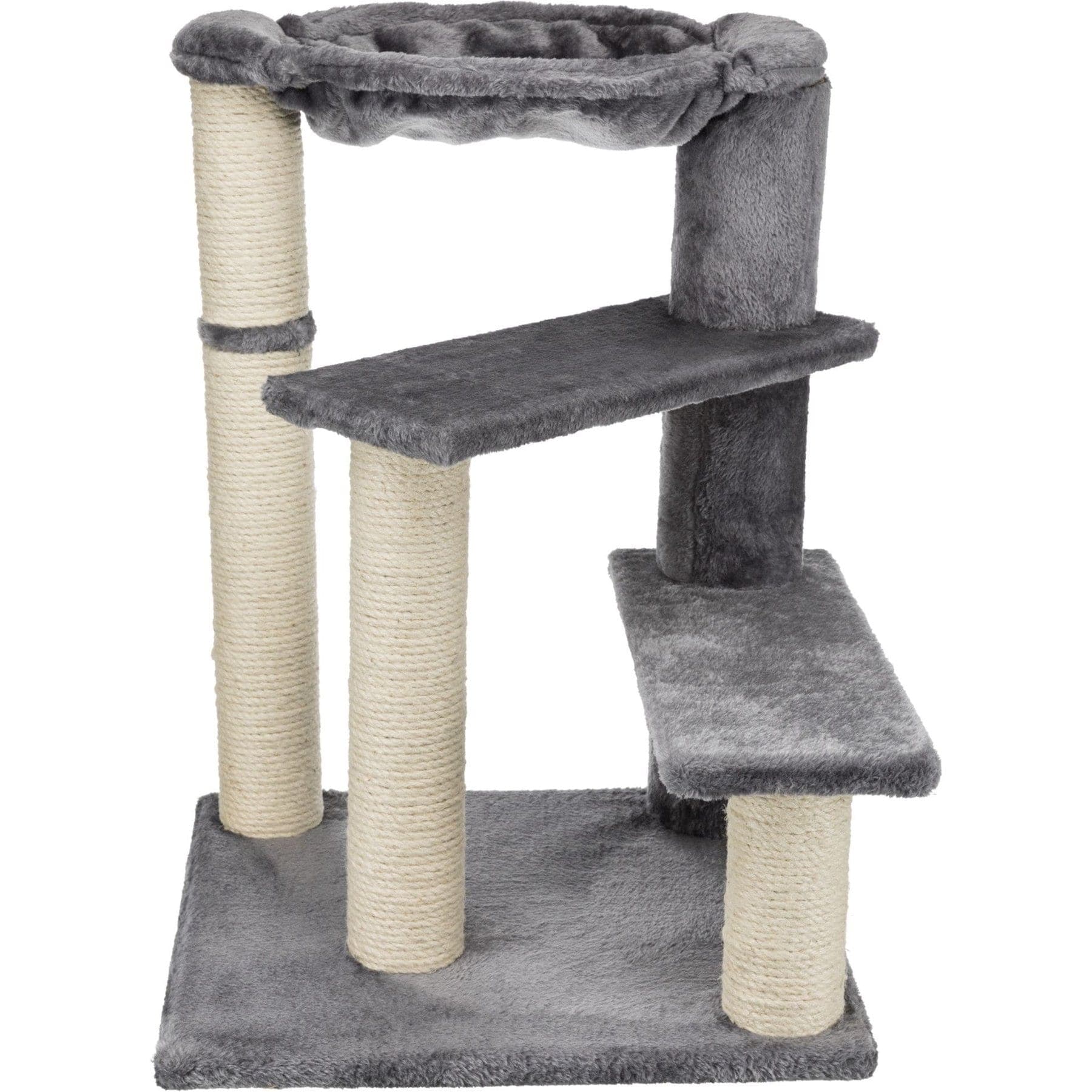
A lower 27.6-inch cat tree with stepped resting places. Check the step distances and bed size for your individual cat.
Petful may earn a commission when you click through to Chewy, at no extra cost to you.
A new tree is not the only possible outcome. If elevated furniture no longer fits the cat’s use, an accessible resting place and separate floor-level scratching option may meet the immediate need. Choose the arrangement that works for the individual cat rather than replacing height with height by habit.


