
Peachy has a good reason to feel pretty peachy: It’s received investment from private equity firm Stride Consumer Partners.
Financial details of the funding round, other than that Stride, backer of Patrick Ta, First Aid Beauty and Odele, was the sole investor, weren’t disclosed, but it comes on top of $29 million the aesthetics services chain has already raised, according to an estimate in financial information resource PitchBook. Previous investors include Base 10, BrandProject, Brand Foundry Ventures and Great Oaks Venture Capital.
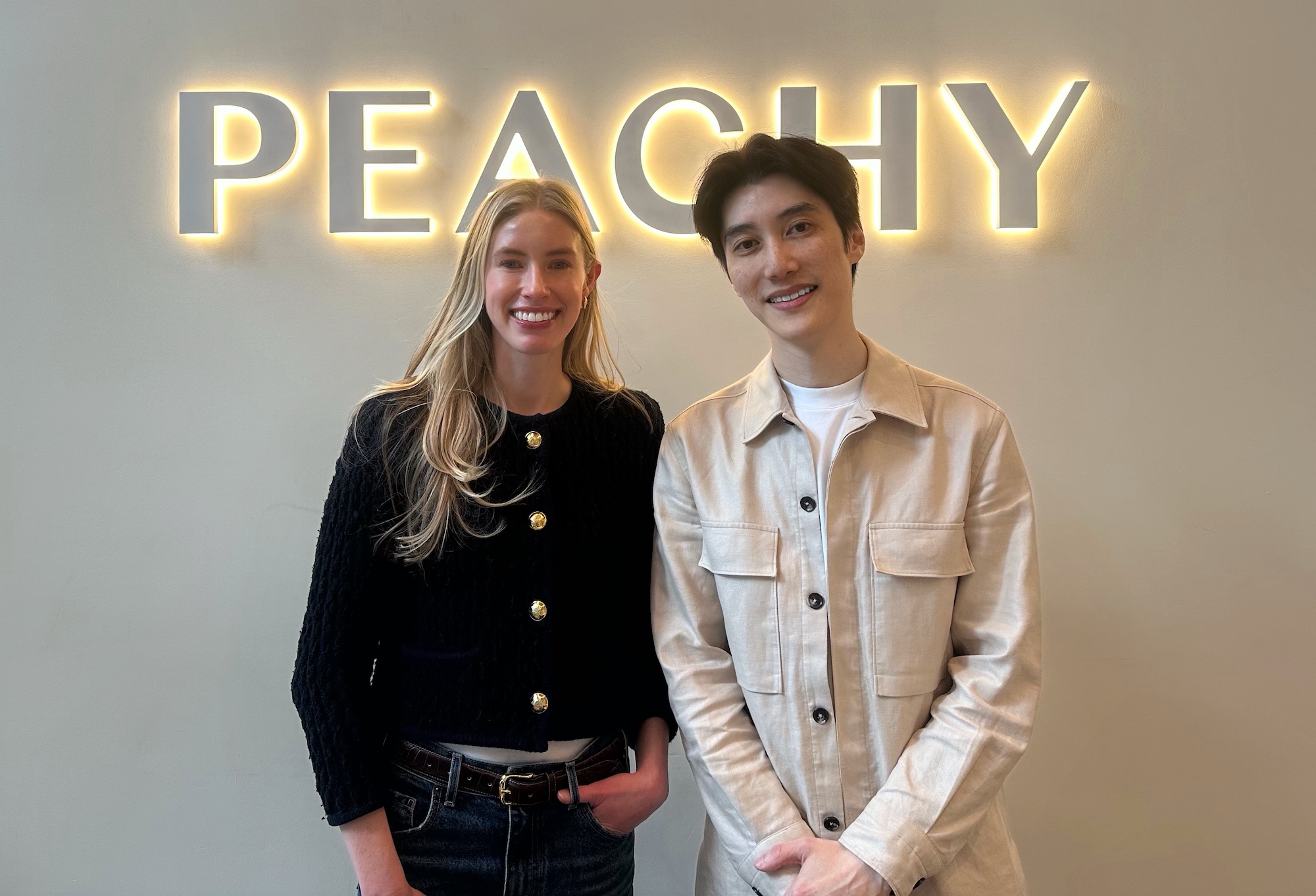
Co-founded by Carolyn Treasure, a Harvard University-trained physician, and Eric Zhang, a former consumer and retail investment banker, Peachy’s revenues have increased 60% year over year. The company will put the funding toward team development, brand marketing and expanding its footprint in existing and new markets.
The med-spa and aesthetics treatment market is surging precipitously, with Precedence Research projecting it will accelerate at a rate of 14.5% over the next few years. That acceleration, driven in part by aesthetic treatment adoption by young patients and GLP-1 users, has lured investment, with chains like VIO Med Spa, SEV Laser, SkinSpirit and Ideal Image garnering private equity funding. However, private equity penetration of the field remains a tiny fraction of the landscape of around 11,000 med-spas nationwide.
Mike Banu, a partner at Stride, attributes the firm’s investment in Peachy to its enthusiasm for the chain’s business more than bullishness about the category on the whole. Stride typically invests $10 million to $150 million per deal in consumer companies generating roughly $10 million to $150 million in revenue.
“Carolyn and Eric have built a really compelling, trusted brand in the neuromodulator space with a real authentic point of view, and it comes with a really compelling value proposition to the consumer,” says Banu. “At the end of the day, that excites us most.”
Peachy’s concept centers on offering neuromodulator treatments administered by highly trained, board-certified nurse practitioners for a flat fee—$425 for wrinkle reduction and $525 for masseter muscle treatment—and broader offerings aren’t expected anytime soon. Peachy uses Botox, Dysport, Jeuveau and Xeomin, with Botox and Dysport carrying an additional $150 charge. Peachy doesn’t offer Daxxify or Letybo, but is keeping tabs on them and reviewing data on their effectiveness and safety.
Peachy speaks to the modern “undetectable” era of aesthetics. The chain promises “subtle results that never alter or change how anyone naturally looks,” according to Treasure. She asserts that approach is behind Peachy’s 40% client referral rate and 95% conversion rate after a complimentary consultation. She says, “If we had expanded to 10 different services, we would not be able to have the very high touch, highly personalized experience that exists at Peachy.”
While many investors aren’t comfortable with brick-and-mortar formats that tie companies to long-term leases, buildout and maintenance costs and high levels of staffing, Stride has seen success with physical locations at Drybar, the blowout chain in which it was an early investor. Formerly Castanea Partners, the firm invested in Drybar in 2012 and retained a stake after bringing in Roark Capital Group as a minority investor in 2016, ahead of the brand’s 2019 split sale to Helen of Troy and WellBiz Brands.
Banu believes Peachy is following in Drybar’s footsteps. He explains its laser focus on neuromodulator treatments as opposed to the kitchen sink approach is similar to Drybar’s blowout specialization that provided a uniform experience and inspired consumer trust as it spread across the country. Banu says, “That’s largely what is driving the success of Peachy today.”
Peachy has 15 locations, up from 12 last year. The new funding will facilitate expansion in in six current geographical markets—New York City, where Peachy opened its first studio in July 2020; Washington, DC; Chicago; Austin; Charlotte and Atlanta—and new markets such as Houston, where it’s signed a lease to enter the city.
“The brand, as we expand, continues to resonate with clients the exact same way it did in our first location,” says Treasure. “We’ve seen a lot of really exciting growth and could not be more excited to begin the partnership with Stride to continue to build the brand and scale the brand across the U.S.”