
“Onboarding Sephora is like an Olympic sport,” jokes Maed founder Denise Vasi, the actress, model and content creator turned beauty entrepreneur. “You’re jumping in, and you’re learning.”
A year into Maed’s run at the beauty specialty retailer, that entrepreneurial athleticism appears to be paying off. The self-funded lip brand, which launched on Sephora.com and in 80 Sephora stores in August 2025, is expanding its footprint by 36% to 109 doors this month, with its full assortment entering the additional locations. The expansion encompasses several prominent stores, including Fifth Avenue, Meatpacking, Brickell City Centre, Design District, Disney Springs, Stanford, Topanga and Manhattan Village.
Maed exceeded its day-one Sephora sales forecast by 76% and its first-week forecast by 43%, according to the brand. Across its first two full quarter-over-quarter comparisons at Sephora, it averaged approximately 16% growth at the retailer. The brand declined to share revenue, sell-through, sales-per-door or replenishment figures.
“You’ve got to hit projections at minimum and hopefully exceed those,” says Vasi, who’s careful not to equate placing her brand at Sephora with earning a lasting place on its shelves. “It’s really hard to get on the shelf,” she says. “It’s a very big feat, but it’s even harder to stay on the shelf.”
Maed entered Sephora with a narrow focus on lips and a clear hero: Revive Day + Night Lip Balm, a tinted treatment designed for daytime use or as an overnight mask. Revive continues to be a top performer for the brand. Covet, a shade extension introduced in April, surpassed the brand’s combined April and May sales projections during its launch month alone.

Maed’s Sephora expansion coincides with the arrival of Duet Lip Pencil, the first new product since the brand’s debut in stores. The $28 dual-ended pencil, which launched on Sephora.com on Aug. 14 and entered stores on Aug. 24, exceeded its launch projection by 66%, Maed reports.
Duet represents Maed’s attempt to broaden its color authority without abandoning its lip-care premise. The wooden pencil pairs two complementary shades and two formulas: a firm, matte contour end for definition and a creamy, satin cushion end for blending, filling and softening. As consumers look for value, dual-sided makeup products have been proliferating.
Vasi says the idea for Duet grew from noticing that customers use multiple pencils and lip products to create dimension. Sephora customer insights highlighted two competing complaints: Soft pencils can lack staying power, while traditional firm formulas can drag. “The habit was there, and we focused on how we could simplify that,” says Vasi.
Executing the product required two manufacturing processes. The firm component is extruded into wood, while the softer formula is poured before the components are joined. Including shade development, Duet took about two years to create. “I’m going to write a book about her one day,” laughs Vasi.
Maed’s road to Sephora was deliberate. Vasi applied to Sephora Accelerate in 2023 and joined the program’s 2024 cohort while developing a four-product system built around what she describes as a “care before color” philosophy. Maed began in direct-to-consumer distribution in September 2024.
“I’m a bootstrapped brand by choice, and I have to make sure that I’m making the best decision at the end of the day, to the dollar.”
Although Sephora expressed interest in bringing Maed to the retailer earlier, Vasi resisted accelerating the timeline before the brand had established itself online. “I told Sephora, ‘I can’t wait to enter, but I need to launch my DTC and have some learnings first,’” she recalls. “I have to prove market fit. I need to make sure that we don’t need to change formulas.”
Sephora Accelerate participants must pass an operational checklist before being invited to launch at Sephora, according to Vasi. Education from the program has influenced Maed’s hiring priorities. The brand relies heavily on fractional talent, but, as it scaled, Vasi brought in an operations lead to manage purchase orders, third-party logistics and international shipments. Vasi remains the final decision-maker on financials, inventory buys and the allocation of products between Sephora and Maed’s website.
As for tracking performance, Maed monitors its Sephora business through the retailer’s brand portal, which provides sales information through the previous day. Equally important is having direct access to the Sephora personnel that helps put the data into context, and Vasi speaks frequently with Maed’s Sephora merchant.
At their first meeting, Vasi laid out how she envisioned the relationship with the merchant. She recounts, “I’m going to do all the work, put my head down and give you 150%, but you’ve got to be my quarterback.”
Sephora advises Maed on where it should participate today versus opportunities better suited to years three through five. “When there are opportunities for us to get a placement, it’s very hard for a bootstrapped brand like ours,” Vasi says. “We are not in the space to buy a banner.”
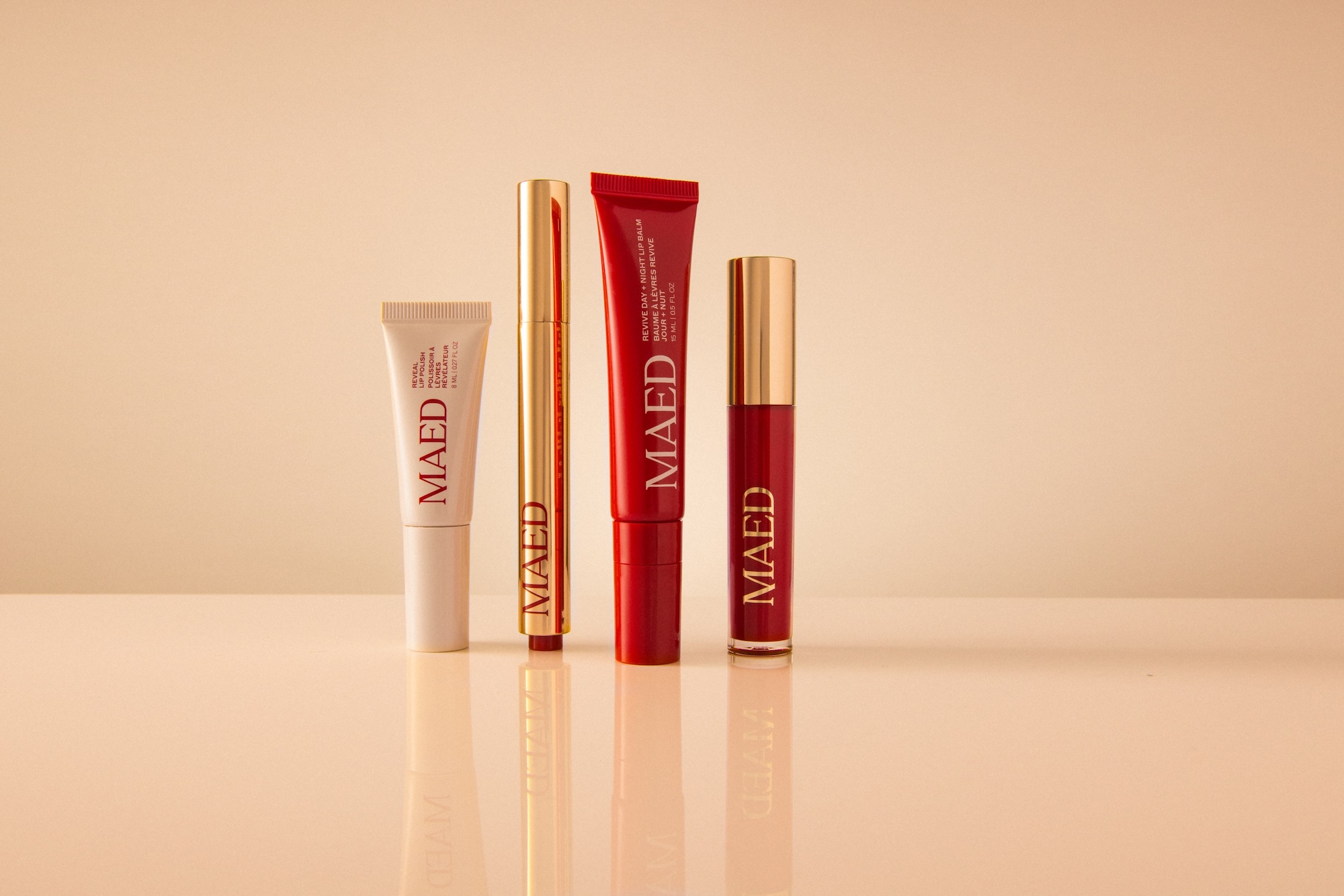
Out of the roughly 370 brands stocked by Sephora, Beauty Independent estimates that fewer than 5% are bootstrapped. Vasi funded Maed with profits from her former content company and hasn’t raised outside capital, although she has taken meetings with investors. Sephora expansion, obviously, requires greater capital outlays.
Vasi says, “There will be a time and a place to raise, and when the business needs more than I can provide, that’s going to be the right time.”
Self-funding requires Maed to be highly selective about spending as it competes with larger brands for costly marketing initiatives. “I’m a bootstrapped brand by choice, and I have to make sure that I’m making the best decision at the end of the day, to the dollar,” says Vasi. “If I spend this, what is it going to bring back, and how long does it take to turn that spend into revenue?”
That calculation extends to her time. Vasi oversees the business, develops products and serves as its face. “Can I do the Excel sheets? Yeah, but if it takes me two times longer than having someone who just loves that type of work, it doesn’t make sense,” she says. “Time is money.”
For Vasi, staying on Sephora’s shelves requires operational control, rigorous spending and an honest assessment of the brand’s stage. She says, “When we come together to make decisions with Sephora, I’m always really focused on centering that client first and foremost.”
The move from 80 to 109 Sephora doors is evidence that the measured approach she insisted is bearing fruit. “The best thing you can do is just be really focused, center your customer, and move with intention,” says Vasi. “If you are meant to be at a retailer, you’ll get there.”